SCGP Newsroom

Stick’Em Makes Education More Accessible with a Set of Chopsticks

Spotlight

Stick’Em Makes Education More Accessible with a Set of Chopsticks

Loading Data...

In the age of AI, STEAM (Science, Technology, Engineering, Art, and Mathematics) skills are at the heart of learning. Yet more than 90 percent of the world’s population, or nearly one billion people, lack access to quality STEAM education.

Students’ Idea for Every Learner

Stick’Em is a Singaporean education tech startup. It was established after four 17-year-old students, with their inspiring experience as robotics trainers and STEAM instructors, decided to make a difference. Recognizing that traditional education models did not effectively support learning, these young entrepreneurs dedicated five years—while studying at university—to fundraising, designing, and developing Stick’Em and its low-cost STEAM learning innovation.

A Stick’Em kit consists of two main components: a construction set featuring items such as bamboo chopsticks, wheels, rubber bands, and 3D-printed connectors; and a basic electronics set, including circuit boards, motors, and power banks. These widely available and affordable materials keep the price of each Stick’Em kit at just USD 100, about 10 times cheaper than comparable learning kits on the market.


Affordable & Sustainable Advanced Learning

On top of featuring affordable, low-cost, and replaceable parts, Stick’Em has two competitive advantages that allow it to create a broad and lasting impact on STEAM education. Firstly, its flexible lesson platform is compatible with all types of infrastructure. Whether a school uses computers, tablets, or smartphones, as long as there is internet access, students can connect, write code, and instantly transform ordinary chopsticks into robots. Secondly, its teacher training model is easy-to-understand, empowering teachers for any subject areas to confidently teach STEAM.

Currently, Stick’Em innovation has been widely adopted. It has already made its way into 27 state schools in Singapore and more than 90 overseas schools, covering over 12,000 students. This tech startup has generated revenue from not just one-time equipment purchases but also recurring platform fees. In 2025, Stick’Em won first place at the Hult Prize 2025, the world’s largest social business plan competition for university students—securing a USD 1 million prize.

Stick’Em success proves that a business can create both social impact and economic value, and quality education can in fact, be provided at a low cost. With Stick’Em, everyone can enjoy equal access to future skills.


Source: a LOT Newsletter Vol.38

เนื้อหาที่เกี่ยวข้อง

Loading Data...

SCGP Joins Hands with Minburi Technical College to Enhance Employee Capabilities through Dual Vocational Training in Printing and Packaging

SCGP Joins Hands with Minburi Technical College to Enhance Employee Capabilities through Dual Vocational Training in Printing and Packaging

Loading Data...
Recently, SCGP, in collaboration with Minburi Technical College, organized the “SCGP x Minburi Technical College Dual Vocational Training Program” for the 2026 academic year. The program aims to enhance employees’ knowledge and skills in printing and packaging through theoretical learning conducted by instructors from Minburi Technical College, combined with hands-on practical training under the trainers from each department. Participants will gain experience both at their own plants and other SCGP plants, enabling them to broaden their practical exposure and effectively apply their knowledge to their work. Upon completion of the program, participants will receive a High Vocational Certificate in Printing and Packaging from Minburi Technical College. The first cohort consists of 19 employees from Fiber Packaging Business, and Consumer and Performance Packaging Business.
In May, an orientation session was held at SCG Head Office to clarify the roles and responsibilities of dual vocational students, provide guidance on balancing study with work, and prepare participants for learning under the dual vocational system. The session also provided an opportunity for participants from various plants to get to know one another, exchange experiences, and build a shared learning network. This will support the development of both academic knowledge and practical skills in production operations, while emphasizing the importance of integrated learning between theory and real work experience to create sustainable value for both the learners and the organization.
SCGP remains committed to developing quality talent and promoting lifelong learning to enhance employee capabilities and support the organization’s sustainable growth.

Related Contents

Loading Data...

SCGP Packaging Speak Out 2026 Announces Winners of the Intense “Final Pitching Day” Positioning Packaging as a Strategic Marketing Tool to Communicate Brand Essence and Deliver Value to Consumers

SCGP Packaging Speak Out 2026 Announces Winners of the Intense “Final Pitching Day” Positioning Packaging as a Strategic Marketing Tool to Communicate Brand Essence and Deliver Value to Consumers

Loading Data...
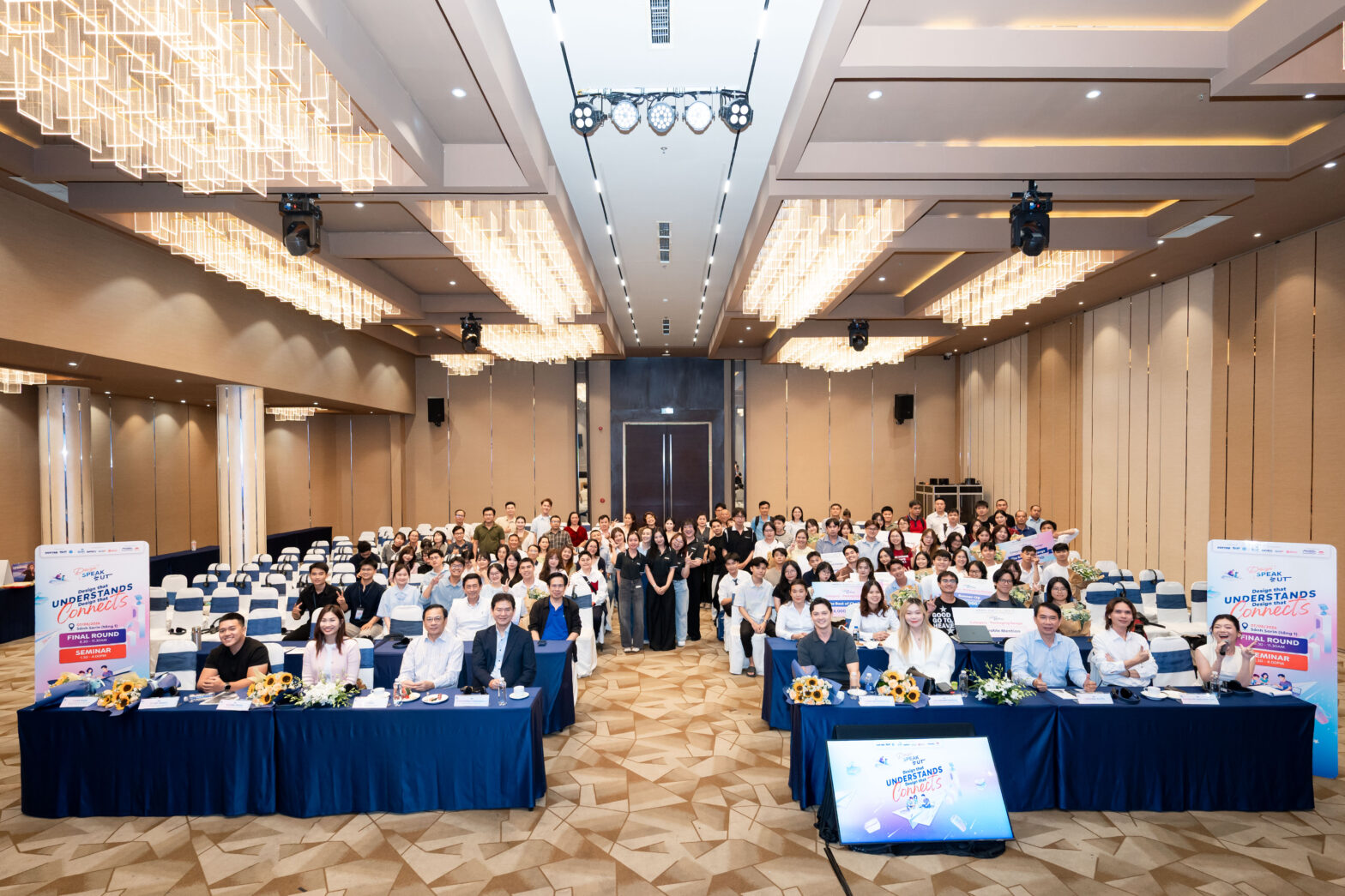
SCG Packaging Public Company Limited or SCGP, together with Srichand United Dispensary Co., Ltd. and Marketing Association of Thailand (MAT), managed by the Junior Marketing Association of Thailand (J-MAT)., announced the winners of the SCGP Packaging Speak Out 2026 project. The competition platform provided university students with the opportunity to connect design with business strategy in order to develop packaging that supports marketing success under the concept “Packaging as Strategic Marketing Tool,” integrating design with business strategy through “Design & Marketing Integration.” Students worked on a real business challenge from the SRICHAND brand under the themes of Modern T-Beauty and Sustainability, preparing them for the real working world. The event also featured a special inspirational talk exploring customer experience creation from branding to packaging amid the growing T-Beauty market.

Searching for the Winners at the Final Pitching Day
From more than 500 participating students nationwide, 15 finalist teams comprising 60 students advanced to the highly intensive Final Pitching Day. The stage was filled with determination and creative energy as participants presented packaging designs integrated with business feasibility through a Packaging Design System, competing for a total prize pool of over THB 120,000 along with certificates. The team that won the Gold Award (THB 40,000, certificate, and a two-month internship opportunity with SCGP) was “Noo Nee Lae T-Beauty,”consisting of four members: Napaktida Ueramnuaypornchok, a second-year student in the School of Business Administration for Society, Digital Marketing Program, Bangkok University Rangsit Campus; Thanaphong Pornsirisawee, a first-year student in the Faculty of Commerce and Accountancy, Business Administration Program, Chulalongkorn University; Wara Achayuthakan, a third-year student in the Faculty of Decorative Arts, Product Design Program, Silpakorn University Tha Phra Palace Campus; and Nutcha Inyoo, a second-year student in the Faculty of Agro-Industry, Packaging & Materials Technology Program, Kasetsart University Bangkhen Campus.

Their winning concept, “The Serene Bloom,” reflected the perspective of Modern T-Beauty through the image of a “fighter woman” who must constantly face challenges and changes in work, environment, weather conditions, and daily life. As a result, consumers seek emotional stability from a brand that acts as a safe space while empowering them to confidently express themselves. The packaging design featured fluid yet internally strong forms, highlighted with rose-inspired line art symbolizing blooming through every stage of life. Key designs included a rose-pattern embossed compact powder case using chemical-free embossing techniques and an eco-friendly refill system; eye-catching cream sachets featuring moisturizing shades and sustainable packaging design from box to sachet; and sunscreen packaging with ergonomic curves designed to fit comfortably in the hand, paired with a 100% recyclable box.
Gold award
Gold award mockup
The Silver Award (THB 25,000 and certificate) was awarded to team “Klum Nueng Kueng Noom” for their concept “Adaptive Beauty,” which reflected Modern T-Beauty as beauty designed for a fast-moving lifestyle, adaptable to every situation and climate. The Bronze Award (THB 10,000 and certificate) went to team “Sanjee Srichand” for their concept “Always Ready,” presenting beauty as freedom without limitations and suitable for everyone in all weather conditions. Five Consolation Awards (total prize value THB 15,000) were also presented to Team Dee Mak Loei Ka, Team Girl’s Girl 888, Team Everything is Fine, Team Sri to the Moon, and Team Soft Glam Korn Mae Son Wai.
Pitching 3
Finalists' mockup

Exploring T-Beauty from Brand Essence to Packaging Experience
The event also featured an Exclusive Talk under the topic “Experience T-Beauty Brand Essence through Packaging,” which explored the role of branding, marketing, and packaging in driving the growth of T-Beauty while transforming Brand Essence into a tangible Brand Experience for consumers.

Panel discussion
Charkrit Direkwattanachai

Charkrit Direkwattanachai – Vice President of Administration and President of Junior Marketing Association of Thailand (J-MAT), spoke about the T-Beauty trend, stating that the concept of “Thai beauty” or T-Beauty has become increasingly clear in the eyes of the global audience through the export of Thai dramas and series to international markets, especially over the past 2–3 years. This has created significant market opportunities for Thai cosmetics and skincare brands. “T-Beauty, the essence of Thai beauty, has already been clearly communicated to the world. However, for Thai cosmetics and skincare brands to sustainably grow and stand alongside J-Beauty or K-Beauty, they must deliver high-quality products with attractive packaging that simultaneously reflects the brand essence. Only then can they become powerful enough to capture the attention of global consumers,” he said. He further emphasized that brands must be able to answer the question: “Why does the brand exist in this world, and in what direction will it lead the organization?” The answer to this question becomes the brand’s charm and differentiating factor. From there, brands can develop strategies to create meaningful consumer experiences that foster emotional connection and ultimately build brand loyalty.

Ekaraj Niroj, Chief Customer Officer, SCGP, stated that packaging must be more than just a product container; it must serve as part of a marketing strategy to create brand value and make a strong first impression on consumers. Packaging should reflect the Brand Essence or brand identity while also addressing sustainability. “Sustainability is not an option, but a consumer expectation for brands to demonstrate social responsibility, such as designing packaging that uses less material and can be recycled and circulated back into use,” he said. Regarding the promotion of T-Beauty to the global market, he added that “T-Beauty” can also evolve into “G-Beauty” (Global Beauty). A clear example is the “Elephant Pants,” which consumers around the world recognize as a distinctive Thai product. If supported by packaging design that clearly reflects the brand’s identity and unique strengths, it can further enhance product value, strengthen brand recognition, and expand marketing opportunities on a global scale.

Ekaraj Niroj
Rawit Hanutsaha

Rawit Hanutsaha – Chief Executive Officer, Srichand United Dispensary Co., Ltd. & Mission to the Moon Media Co., Ltd., stated that one of the key success factors in branding today is transparency and sincerity toward customers. Once customers feel that a brand is not genuine, it can destroy the positive experience they have with the brand, and they are ready to switch to many other alternatives available in the market. “If a brand wants to become something in the hearts of customers, it must consistently act that way (Brand Essence) and embed it as a core belief within the organization. Most importantly, brands must constantly communicate with customers because customers reflect their true feelings toward the brand better than anyone else. True branding is not what entrepreneurs think they are, but what customers say the brand truly is. That is the heart of branding,” he said. Regarding the opportunity to bring T-Beauty to the global market, he added that it must be driven as a broader national movement through collaboration across multiple industries, such as entertainment, fashion, and packaging, in order to communicate the identity of T-Beauty to global audiences in every dimension. He also emphasized the importance of research and development (R&D) in building product quality and brand credibility, combined with storytelling that enables consumers to make purchasing decisions based on both rational considerations and emotional value simultaneously.

All of these activities contributed to expanding knowledge, enriching experiences, and inspiring innovation and creativity through collaboration from all sectors involved in the SCGP Packaging Speak Out 2026 project, now continuing for its 11th year. SCGP remains committed to empowering youth to grow confidently, unleash their creativity in the real business world, and apply their knowledge to support Thai businesses and SMEs sustainably in the future.

Related Contents

Loading Data...

SCGP Expands Fiber Packaging Capacity in Vietnam Enhancing Integrated Packaging Solutions to Capture Growing Demand in the Region

SCGP Expands Fiber Packaging Capacity in Vietnam Enhancing Integrated Packaging Solutions to Capture Growing Demand in the Region

Loading Data...
SCGP announces an investment to expand a new corrugated containers production base in the south of Vietnam, with a total investment of Baht 748 million. The investment aims to capture growth opportunities from the continuously expanding fiber packaging market in Vietnam, while enhancing integrated consumer packaging solutions, strengthening competitiveness, and supporting quality growth. Commercial start-up is expected in September 2027.
Mr. Wichan Jitpukdee, Chief Executive Officer of SCG Packaging Public Company Limited or SCGP, said that SCGP has continued to pursue its strategy to build growth across ASEAN. Vietnam is considered one of SCGP’s key strategic markets, supported by strong economic growth and continuous inflows of foreign direct investment. The company made its first strategic investment in the south of Vietnam in 2009 by establishing Vina Kraft Paper Company Limited (VKPC), a packaging paper production base in Ho Chi Minh City. In 2016, VKPC expanded its capacity at the same location to support the growing demand for packaging consumption in the region. SCGP later further expanded its business in Vietnam through investments in various packaging businesses, including packaging paper, fiber packaging, foodservice packaging, high performance and polymer packaging, and other related businesses.

To support growth and strengthen its capability to respond to rising consumer packaging demand, SCGP is moving forward with the expansion of high-quality corrugated containers capacity. The facility will feature advanced automated technology to drive production efficiency and operational reliability, with a production capacity of 26,800 tons per year. The new facility will be located within VKPC’s existing plant area in Ho Chi Minh City, Vietnam, with a total investment of VND 604 billion, or approximately Baht 748 million. The first phase of investment will focus on expanding converting capabilities for the fiber packaging business in the south of Vietnam. Commercial operation is expected to begin in September 2027.

This strategic investment will further strengthen SCGP’s ability to serve and capture fiber packaging demand, which is expected to grow by approximately 7% per annum. It will also enhance business competitiveness and elevate the company’s integrated packaging solutions for customers. In addition, by leveraging y’s existing facilities, the new box plant is expected to optimize logistics, inventory management, and operating cost, while enhancing competitiveness and service efficiency along the supply chain.
SCGP is committed to meeting the growing demand for sustainable and innovative packaging by offering integrated solutions across fiber, polymer, and foodservice packaging, tailored to the evolving needs of customers in Vietnam.

News Release

Related Contents

Loading Data...

EMPOWER TEAM & HEAD TOWARDS SHARED GOALS

P-DNA

EMPOWER TEAM & HEAD TOWARDS SHARED GOALS

Loading Data...

In today’s complex and rapidly changing business world, seamless collaboration is the key to unlocking excellence. In this issue, we sat down with Mr. Bhakkawat Bhasipol, Managing Director, Siam Kraft Industry Co., Ltd., to find out how this new-generation executive has fostered seamless teamwork for the company’s sustainable growth throughout the past few decades.

20 YEARS OF ADAPTATION OPPORTUNITIES

Mr. Bhakkawat started working for the company in 2000 as a plant engineer and later received a company scholarship to pursue an MBA overseas. After he returned to Thailand, he took on a wide range of challenging roles, from business planning and international sales to sourcing management and corporate-level strategic planning.

“The major turning point in my life was my transfer from the international sales field during the Hamburger Crisis. Back then, domestic demand faltered, and we had no other choice but to tap into overseas markets,” he recounted.

“I was really worried because with my engineering background, I was never a salesman. But over time, I had learned to apply my experience to my new role. Data analyses were made to assess the demand/supply of each target country. Digging deeper then revealed new opportunities. I have eventually realized that there is no task we could not accomplish, as long as we apply what we have.”

CHANGE & GROW TOGETHER

In a high-level executive position, Mr. Bhakkawat not only takes on more responsibilities but also adjusts his mindset toward people management.

“I used to think we couldn’t change others. We could only change ourselves. However, while studying in the Advanced Management Program, my executive coach explained that my beliefs were just partly true. With coaching, coachees can develop. If I were to stick to my old beliefs, it would mean coaching was meaningless. It is necessary to understand that people can change and improve,” he interestingly shared his experience on this shift in thinking.

“From that time on, I no longer focus solely on changing myself. I communicate and coach to help others develop their potential and fine-tune for smooth collaborations.”

SEAMLESS COLLABORATION BEGINS WITH PURPOSE

“In large organizations, conflicts naturally arise. The production team wants big production volumes, while the sales team wants the best products at the lowest cost. Each team has its own KPIs. So, we need to step back and look at the bigger picture like our organization’s purpose. For example, SCGP’s goal is to make the world a better place. If everyone, regardless of department, shares the same vision, their smaller goals can be adjusted and aligned in the same direction,” he continued.

COMMUNICATION FOR MUTUAL UNDERSTANDING

Mr. Bhakkawat also shared a real case about a customer’s demand for a special-grade product requiring extremely high cleanliness standards.

“After listening to the customer’s brief, the quality management team interpreted it as the requirement for 10-PPM (parts per million) cleanliness. That would mean the manufacturing team would need special raw materials and more time, resulting in higher costs.

“We then decided to double-check with our customers and all relevant staff, which enabled us to find out that the customer was fine with the 400 PPM. So, we could produce products for our customers without the need to use special raw materials or production processes. This case makes clear that we should communicate and connect with the customer for the best solutions.”

BRIDGING THE GAP FOR POWERFUL TEAMWORK

In the eyes of Mr. Bhakkawat, the age gap within the workforce presents opportunities.
“I am on the border between Gen X and Gen Y. But now, more Gen Zers have joined the workforce. In this multigenerational context, it is important to be understanding. Older staff should be open to the younger staff’s perspectives and knowledge, while the juniors should learn from the seniors’ experience and prudence. If we combine the strengths of different generations in our corporate culture of Customer and Consumer Centricity, Seamless Collaboration, Proactive & Agile, Inspiration & Innovation, our organization will enjoy solid growth, and we all will be happy at work.”

For personal development and professional success, Mr. Bhakkawat recommends his long-held 4D principles:

  1. Discipline

Considered the foundation of everything, discipline starts with small actions such as being punctual and keeping one’s word. These characteristics are essential to professionalism.

  1. Decisiveness

Leaders have a duty to make decisions. A team cannot move forward if its leader does not take a clear stand, and decisions must be made based on facts and data.

  1. Development

The world evolves so fast that today’s knowledge may no longer be relevant tomorrow. So, keep learning and take good care of our health.

  1. Dedication

Build the next generation. Be open to the fact that younger people are tech-savvier and understand new-age consumers better. Our role is to help them grow.


เนื้อหาที่เกี่ยวข้อง

Loading Data...

SCGP Drives Nature Positive, Connecting Forest Plantation to the Value Chain Generating Community Income While Restoring Ecosystems

SCGP Drives Nature Positive, Connecting Forest Plantation to the Value Chain Generating Community Income While Restoring Ecosystems

Loading Data...
SCGP is advancing sustainability through the Nature Positive approach by integrating forest management under FSC™ standards as a key mechanism to connect natural resource stewardship with the value chain, creating business growth alongside sustainable improvement in community quality of life.

Mr. Mahasan Thieravarut, Managing Director of The Siam Forestry Co., Ltd. in SCGP, stated that SCGP recognizes the importance of biodiversity and ecosystem conservation and is therefore committed to advancing the Nature Positive approach by linking business growth with natural resource stewardship and community development throughout the value chain. The company aims to halt and reverse biodiversity loss by 2030, with a goal of full recovery by 2050 through systematic collaboration among all sectors.

The Siam Forestry Co., Ltd. in SCGP has promoted eucalyptus plantation as an economic crop and raw material for paper and packaging production under FSC™ standards, which serve as a key mechanism in driving the Nature Positive approach. A key principle of FSC™ is avoiding deforestation and preventing the conversion of natural forests into other land uses, while also requiring at least 10% conservation areas within plantation forests, alongside generating economic, social, and environmental benefits to protect and restore ecosystems and preserve biodiversity in the long term.
The company has implemented the Nature Positive approach across various areas. Currently, the company has 55,369 rai of FSC™-certified plantation forests under FSC™-FM/CoC standards, with FSC™ license code FSC-C012207, including 6,212 rai designated as conservation areas. The company also collaborates with several organizations, including the Forest Research Center, Faculty of Forestry, Kasetsart University, and the Thailand Forest Ecology Research Network Coordination Center, to conduct biodiversity surveys of plant species and wildlife in conservation forest areas every two years. Kamphaeng Phet is one of the key areas for eucalyptus plantation promotion, with 8,174 rai of FSC™-certified plantation forests, including 1,586 rai of conservation areas. The latest survey identified 82 plant species from 37 families, reflecting the richness and ecological integrity of the area.
Mr. Veerachaet Jantawong, a member of the Nong Hua Wua Subdistrict Administrative Organization, Village No. 8, Bang Wang Phueng, Phran Kratai District, Kamphaeng Phet Province, said that the community has worked together with The Siam Forestry in forest conservation and management through systematic jointly agreed practices, including appropriate land use and providing community food sources while continuously restoring the forest. Local people are also employed to help manage the area, resulting in more stable jobs and income for the community. In addition, visible improvements have been seen in the area, including healthier forests, the return of wildlife, and improved quality of life for local residents.
In addition, the company’s Eucalyptus plantation areas have received PEFC certification. The company is also assessed using remote sensing and satellite imagery technologies, a method certified by Thailand Voluntary Emission Reduction Program (T-VER) developed by Thailand Greenhouse Gas Management Organization (Public Organization) – TGO to create long-term environmental and economic value, while preparing its operations to align with international environmental standards such as EUDR (EU Deforestation-free Regulation) in order to support global market demand and strengthen long-term competitiveness. The company also plans to expand Eucalyptus plantation areas by an additional 10,000 rai and restore another 1,000 rai of conservation forest areas by 2027.
PIC-278
Alongside promoting the Nature Positive approach, the company has continuously implemented initiatives to restore degraded areas and create income opportunities for local communities through the “Eucalyptus Along Irrigation Canal Project.” The project transforms previously unused canal-side areas into systematically managed eucalyptus plantations across several areas in Kamphaeng Phet Province. This initiative helps strengthen canal bank stability, expand green spaces, and generate sustainable income for local communities.
PIC-538
PIC-520
Mr. Supan Katpong, Head of Na Thang Village, Tham Kratai Thong Subdistrict, Phran Kratai District, Kamphaeng Phet Province, stated that beyond tree planting, the initiative has encouraged people in the community to work together in taking care of their own area, fostering unity and a shared sense of ownership. Previously unused land has become valuable again by helping conserve soil and water while continuously generating income for local residents. Once harvesting cycles are completed, the income can also be further developed into village funds to support public utilities and improve the quality of life for people in the community.
SCGP is ready to play an important role in ecosystem stewardship and is committed to driving the Nature Positive concept into concrete action by caring for natural resources alongside economic and social development to create income and strengthen communities, while restoring ecosystems and maintaining the balance of nature as an important foundation for sustainable growth.

Related Contents

Loading Data...

SCGP–SRICHAND–MAT Launch “SCGP Packaging Speak Out 2026” with Intensive Bootcamp to Enhance Marketing and Packaging Design Skills for the 60 Finalists

SCGP–SRICHAND–MAT Launch “SCGP Packaging Speak Out 2026” with Intensive Bootcamp to Enhance Marketing and Packaging Design Skills for the 60 Finalists

Loading Data...
SCG Packaging Public Company Limited, or SCGP, has continued the “SCGP Packaging Speak Out” project for the 11th consecutive year to provide a platform for university students interested in design and marketing to showcase their potential, express their creativity, and further develop packaging concepts into strategic marketing tools capable of creating real value and tangible business impact for brands. The project also offers participants the opportunity to apply their knowledge and ideas to support future SME entrepreneurs.
This year, the project is organized in collaboration with Srichand United Dispensary Co., Ltd. and Marketing Association of Thailand (MAT), managed by the Junior Marketing Association of Thailand (J-MAT). Under the concept of “Packaging as Strategic Marketing Tool,” the program integrates Design & Marketing Integration, connecting design with business strategy, to develop packaging that can drive marketing success through collaboration between design and marketing disciplines. Participants are challenged under the theme provided by the SRICHAND brand, Modern T-Beauty and Sustainability.
SCGP–SRICHAND–MAT Collaborate on SCGP Packaging Speak Out 2026 Ekaraj Niroj, Chief Customer Officer, SCGP (Right), Rawit Hanutsaha, Chief Executive Officer, Srichand United Dispensary Co., Ltd. (Center), and Chakrit Direkwattanachai, Secretary General, Marketing Association of Thailand (MAT) (Left)
Recently, SCGP Packaging Speak Out selected the final 60 participants from more than 500 applicants to join a two-day intensive Bootcamp. The program featured insights from marketing and packaging design experts, along with comprehensive workshops aimed at strengthening participants’ skills, inspiring creativity, and preparing them to present their ideas and prototypes in the final round.

Deep Dive into the Competition Brief: Understanding the Brand and Meeting Market Needs

Krittipanya Charoensuk and Kiatiphap Aunyanuphap, Business Development Manager at Srichand United Dispensary Co., Ltd., explained that the Modern T-Beauty and Sustainability challenge aims to encourage participants to design packaging for beauty care products, including compact powders, cream sachets, and sunscreen, that aligns with the brand vision, “The Pride of Thailand.” The challenge emphasizes integrating design and marketing strategies while effectively communicating the brand essence in a memorable way.

“The challenge lies in creating packaging that can seamlessly embody the brand identity, reflect Modern Thai Beauty, and incorporate sustainability into the packaging design in a distinctive and balanced manner, both from production and marketing perspectives (Packaging Design System).”

Connecting “Design and Marketing Strategy” to Build Strong Brands and Memorable Customer Experiences

Medhee Jarumaneeroj, speaker and advisor to the Junior Marketing Association of Thailand (J-MAT), and Asia Marketing Director, Croda Co., Ltd., discussed branding by emphasizing that brands must first understand their Brand Purpose, the larger vision that guides what the brand aims to achieve in the long term. A strong brand purpose is considered a valuable asset, such as being a brand of innovation, a brand that organizes the world’s information, or a brand that promotes social sharing.

“In today’s era, brands must have a clear purpose. Brands need to define why they exist in this world in order to create differentiation in the market. When customers resonate with a brand’s purpose, they feel connected to it and want to become part of the brand. That is how brands win customers’ hearts.”

He further explained that marketing is not only about selling products (Selling Concept), but also about creating value and returns for both existing and new customers through a Marketing Concept approach. This involves delivering holistic customer experiences, understanding customer pain points, and building long-term relationships that contribute to overall business growth. Therefore, effective packaging design must consider every dimension, understanding customers, company limitations, and competitors, through hypothesis setting, research, and analysis to support decision-making.
“Every brand in this world acts as a lighthouse. Marketing is the sea, and customers are the people rowing their boats across it. When the waves are rough, customers look for guidance and sail toward a lighthouse. That lighthouse must be accessible, distinctive, capable of solving problems, and trustworthy for customers to approach it.”

Brand Essence is the Core of Packaging Design

Peeraporn Sumretpon, Creative Designer, SCGP, highlighted that successful packaging design must reflect the brand’s essence, identity, and spirit (Brand Essence). Packaging should consistently communicate the brand across every touchpoint, enabling customers to recognize the brand even without seeing the logo. At the same time, effective packaging must provide functional usability, aesthetic appeal, and support sales performance for the brand.

“Good packaging functionality means protecting the product, being easy to carry, meeting usage needs, providing sufficient product information, remaining durable during transportation, and ensuring proper sealing. It should also enhance customer experience and make the product feel distinct from other packaging.”

Additional important considerations in packaging design include information hierarchy, color psychology, typography selection and placement, brand consistency, legal compliance, sustainability, photography and illustration, layout, and whitespace. Packaging should reflect the brand personality and Brand DNA while also emphasizing sustainability, such as recyclability, the use of natural materials, extended product lifespan, and recognized sustainability certifications.
These activities represent part of the Bootcamp under the SCGP Packaging Speak Out 2026 project, which aims to cultivate young talents, packaging designers, and marketers by connecting packaging design with marketing strategy (Packaging as Strategic Marketing Tool). The program encourages participants to create packaging that combines strong functionality, aesthetic appeal, and business impact, ultimately contributing to meaningful brand value creation. The Final Pitching Day of SCGP Packaging Speak Out 2026 will take place on May 22nd, with a total prize pool of over THB 120,000, along with internship opportunities at SCGP for the winning team.

Related Contents

Loading Data...

Changing Game with Market Fragmentation

Your answers

Changing Game with Market Fragmentation

Loading Data...

In the earlier days of marketing, customers were usually divided into distinct “segments” based on age, gender, lifestyle, or geographic location. Today, however, the market has changed so much that segmentation no longer works well.

Asst. Prof. Dr. Ake Pattaratanakun has told Your Answers that market fragmentation is extremely challenging, because the same customer may demonstrate different personas and lifestyles across different platforms.

No to “DASHBOARD”, Yes to “DATA”

While data are important to modern marketing, they can’t be used just for simple dashboards. Marketers need to look beyond whether they are selling well or whether customers like their offers.

In the age of market fragmentation, “customer insights” are key.

“For instance, on Instagram, a customer might be a ‘foodie’ who constantly seeks out fantastic dishes to show off to friends. However, when that exact same person switches to Facebook, they may only be interested in sharing academic knowledge. So, what type of person are your customers exactly? The answer is that both these versions are their genuine selves,” Asst. Prof. Dr. Ake says.

This presents a major challenge because it requires marketers to understand the different lifestyles connected to each platform. When people engage in various digital spaces, their passions may be presented differently.

Marketers, therefore, must realize that data gathered from one platform can’t be used to definitively predict or judge the behavior of that same customer on another platform.

Such complexity goes beyond what even capable professionals can manage alone. That is why marketers must leverage artificial intelligence (AI) to analyze big data from various platforms for accurate insights.

Go for “MEANINGFUL”, Not “MICRO”

Many brands think a niche market is unprofitable.

Their belief is not entirely accurate, because marketing focused on a very small group of customers can be successful. With “meaningful marketing”, there are customers who are willing to pay more and prove more loyal.

Clear examples can be found in world-class brands like Ferrari. Several luxury watch brands also generate massive income even though their production volumes are so small.

Another great example is SCG’s Excella roof tiles. Made from genuine ceramic and fired through an exceptionally high-quality kiln process, Excella delivers rich, fade-resistant color. It therefore provides more than just a roof—it preserves the beauty of the home people cherish. Excella stands as a prime example of a product that successfully captures a small yet deeply engaged market.

“Its marketing goes beyond selling a roof for sun and rain protection. It is about offering a finely crafted product for homeowners who value their home’s image and tasteful architectural design,” Asst. Prof. Dr. Ake explains.

One Core, Many Expressions

If the market becomes fragmented, what should brands do?

“Core must be one, but expression can be many,” Asst. Prof. Dr. Ake

points out. These many expressions are compared to the various business units and diverse products under SCGP’s umbrella.

The core of SCGP is its positioning as the partner, which is reinforced through various forms and products. Idea Green offers paper that is gentle on the eyes, while Fest’s food-grade packaging offers quality of life through its high safety standards.

When brands successfully uphold their “core,” they can expand boundlessly. To keep the core intact, brands must not engage in “things that do not align with their identity.” No matter how interesting those things seem, they need to stand their ground.

No Longer Segments, but Fragments— Down to the Finest Sub-fragments

In the near future, the market will become increasingly fragmented to the point of sub-fragmentation. Marketing approaches that rely on gut feelings, past experiences, or broad generalizations will then become ineffective.

Marketers thus must transform into marketing data scientists, because their jobs will require constant data analytics for a chance to tap into new markets.

In the age of market fragmentation, fear not the niche. Fear the unclear. If we use new tools while upholding our core and principles, market fragmentation can be our empowering opportunity.  


เนื้อหาที่เกี่ยวข้อง

Loading Data...

SCGP Reports Q1 Profit Growth Supported by Robust Indonesia Operations Improvement, Adopts Proactive Business Continuity Strategy to Address Volatility

SCGP Reports Q1 Profit Growth Supported by Robust Indonesia Operations Improvement, Adopts Proactive Business Continuity Strategy to Address Volatility

Loading Data...
SCGP announced Q1/2026 operating results with profit growth. The performance was supported by the recovery of operations in Indonesia, underpinned by enhanced operational efficiency and cost savings, alongside resilient domestic consumption across ASEAN. Moving into Q2, SCGP continues to implement proactive strategies to mitigate global economic volatility, while ensuring business continuity through enhancing production efficiency and optimizing energy utilization, alongside delivering solutions through customer centricity.
SCGP announced Q1/2026 operating results, reporting profit in line with its plan. The performance was supported by the recovery of operations in Indonesia, underpinned by enhanced operational efficiency and cost savings, alongside resilient domestic consumption across ASEAN. Moving into Q2, SCGP continues to implement proactive strategies to mitigate global economic volatility, while ensuring business continuity through enhancing production efficiency and optimizing energy utilization, alongside delivering solutions through customer centricity.
Indonesia operations showed a significant improvement in performance, supported by enhanced financial cost management and energy mix arrangement, and increase the integration of value chain following the acquisition of a 100% stake in PT Prokemas Adhikari Kreasi (MYPAK), a high-quality paper packaging manufacturer in Indonesia. In addition, SCGP has implemented technologies, Artificial Intelligence (AI) and machine learning, to its production processes.
As a result, in Q1/2026, SCGP reported total revenue from sales of Baht 29,295 million, representing a decrease of 9% YoY and 3% QoQ. EBITDA was Baht 4,641 million, increasing by 10% YoY and 2% QoQ. Profit for the period amounted to Baht 1,566 million, representing an increase of 74% YoY and 30% QoQ.
Previous slide
Next slide
Wichan added that for the Q2/2026 outlook, the global economy is projected to soften due to geopolitical tensions, which will impact supply chain reconfigurations, energy market volatility, and trade policies. Nevertheless, ASEAN is anticipated to remain resilient, supported by domestic consumption. While demand for daily consumption categories remains favorable, demand for packaging related to durable goods is expected to recover at a gradual pace, constrained by cautious consumer spending and elevated household debt levels. Additionally, the market continues to benefit from the relocation of production bases to ASEAN.
SCGP has been closely monitoring the raw material situation and continues to execute proactive strategies for effective business continuity management to address market volatility. These initiatives include the optimization of alternative energy usage to mitigate long-term cost impacts, alongside the expansion of resin sourcing across multiple regions, such as China, Taiwan, and the United States, to diversify risk and strengthen supply chain resilience.
At the same time, SCGP has refined its business approach by placing strong emphasis on customer centricity, alongside focused portfolio management through the development of packaging solutions that can substitute raw materials, addressing evolving market needs while add value for customers’ businesses. These include innovative solutions such as hybrid packaging (polymer-coated paper). In parallel, SCGP continues to strengthen long-term partnerships with customers, enhance its value chain, and explore opportunities to expand into potential markets to support growth across ASEAN and the global market.
SCGP remains committed to enhancing organizational agility and building a people-driven and agile organization through strengthened governance, capability development, and continuous learning. These efforts aim to enable faster decision-making and effective execution, alongside the adoption of automation, data, and Artificial Intelligence (AI) to enhance efficiency and optimize costs across the supply chain. The company continues to integrate sustainability into its business operations. In Q1/2026, alternative fuel usage accounted for 35% of total energy consumption, aligned with the company’s target of reducing greenhouse gas emissions by 25% by 2030 and the commitment to achieving Net Zero by 2050. The company has maintained an MSCI ESG Rating of “A” and received the Gallup Exceptional Workplace Award (GEWA) 2026 in the Engagement Winner category, reflecting its strong commitment to fostering a highly engaged workforce and driving sustainable growth.

News Release

Related Contents

Loading Data...

SCGP Manages Eucalyptus Plantation Forests Under International Standards with Sustainable Raw Material Sourcing System Development

SCGP Manages Eucalyptus Plantation Forests Under International Standards with Sustainable Raw Material Sourcing System Development

Loading Data...
SCGP manages eucalyptus plantation forests under international standards while developing a sustainable raw material sourcing system to ensure that resource utilization does not impact natural forests. Wood is sourced from certified locations or through responsible management practices according to Forest Stewardship Council (FSC™) standards.
Currently, businesses worldwide face increasing expectations regarding sustainability and supply chain transparency. Packaging must therefore be both functionally efficient and demonstrate that raw materials come from responsibly managed sources with full traceability. Meanwhile, environmental laws and standards in many countries are becoming increasingly stringent, making Responsible Sourcing a critical factor in building confidence among customers, consumers, and stakeholders throughout the supply chain.
One internationally recognized standard is the Forest Stewardship Council (FSC™), which helps verify that forest management and raw material sourcing are conducted responsibly, with a traceability system from forest management through to production processes. Currently, more than 171 million hectares* of forests worldwide are FSC™ certified, and over 68,000 companies in the supply chain have received Chain of Custody certification. Customers can therefore be confident that products made from FSC™ certified raw materials come from sources managed responsibly according to international standards, supporting environmental standard compliance, increasing supply chain transparency, and enhancing brand credibility.
Additionally, FSC™ standard management supports biodiversity conservation, wildlife habitat preservation, and enhances forests’ capacity to absorb carbon dioxide to mitigate climate change impacts. In sustainable plantation forest management, there is a goal to allocate at least 10% of FSC™ certified plantation areas for biodiversity and ecosystem conservation.
SCGP operates under international certification standards that verify responsible plantation forest management and raw material sourcing to ensure customers and stakeholders of the transparency and reliability of production processes and supply chains. In 2025:

• SCGP achieved 100% FSC™ certification across all 46 companies in Thailand and abroad with products related to plantation forest production
• Company-owned and member farmer plantation areas totaling 55,369 rai received 100% FSC™ certification.
• SCGP’s economic forests can sequester 308,949 tCO₂e of carbon dioxide
• SCGP allocated biodiversity and ecosystem conservation areas within FSC™ certified plantation areas totaling 6,212 rai, representing 11.2%. SCGP’s conservation areas in Kamphaeng Phet Province show high diversity indices according to Shannon-Wiener Index assessment, reflecting biodiversity aligned with international Nature Positive goals. These conservation areas also foster community participation through conservation awareness building and collaborative community forest economic utilization management based on community forestry principles.

For additional information about SCGP’s sustainability certifications, please refer to the Sustainability Report at https://sustainability.scgpackaging.com/th/downloads/sd-reports and website https://sustainability.scgpackaging.com/ or contact for product purchases at +662-586-5555
*1 hectare equals 6.25 rai

Related Contents

Loading Data...