Loading Data...
1,155
SCGP Enhances Future Readiness with Innovation and Collaboration for Sustainable Packaging amid Evolving Global Business Regulations
Loading Data...
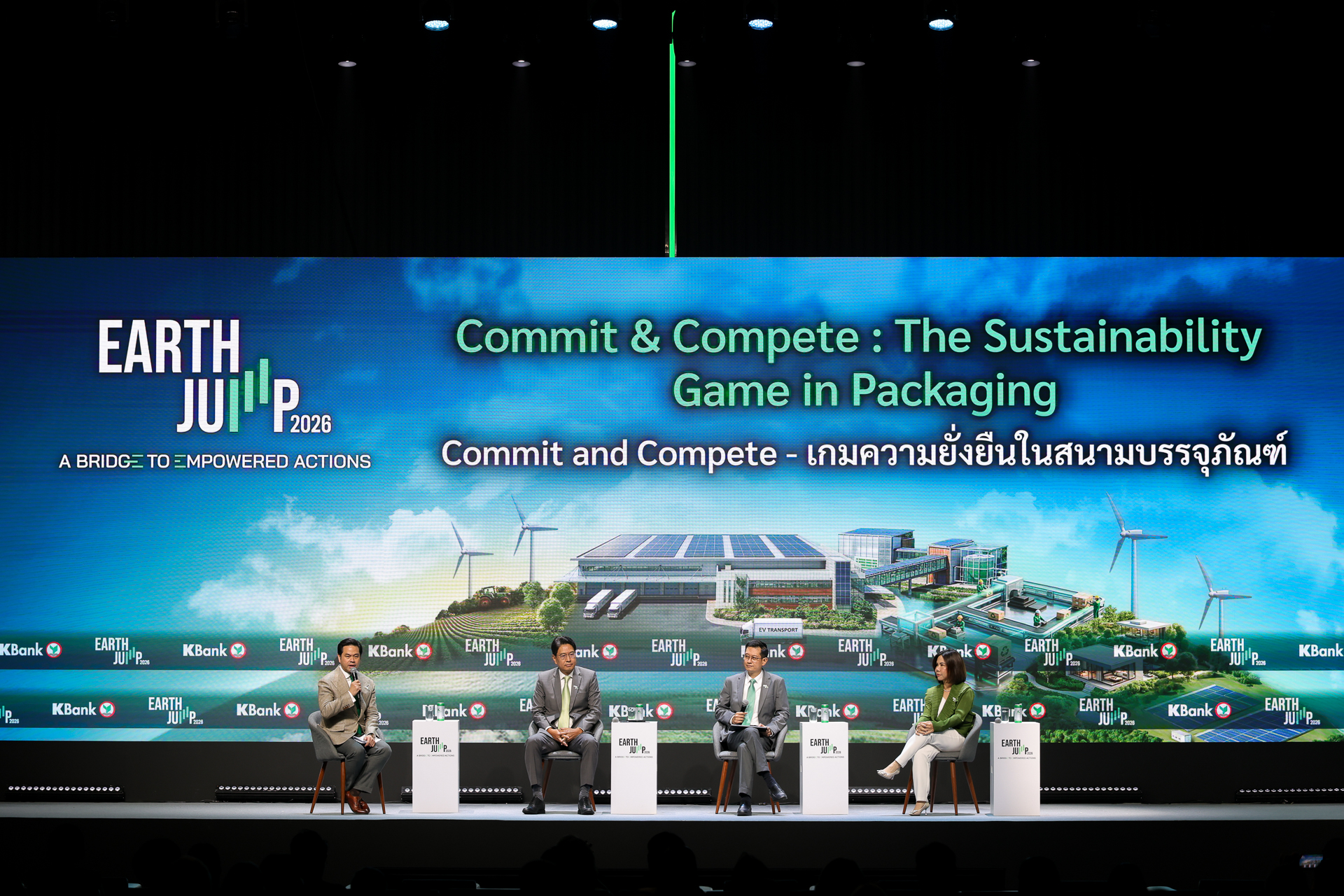
SCGP presented its perspective on transforming environmental requirements into value-creating tools that enhance competitiveness and drive businesses to adapt to increasingly stringent global regulations through sustainable packaging. The company emphasized that “innovation and collaboration” are key factors in helping Thai businesses elevate standards and grow in international markets. These insights were shared at EARTH JUMP 2026: A Bridge to Empowered Actions, during the session titled “Commit and Compete: The Sustainability Game in the Packaging Arena,” organized by KBANK.
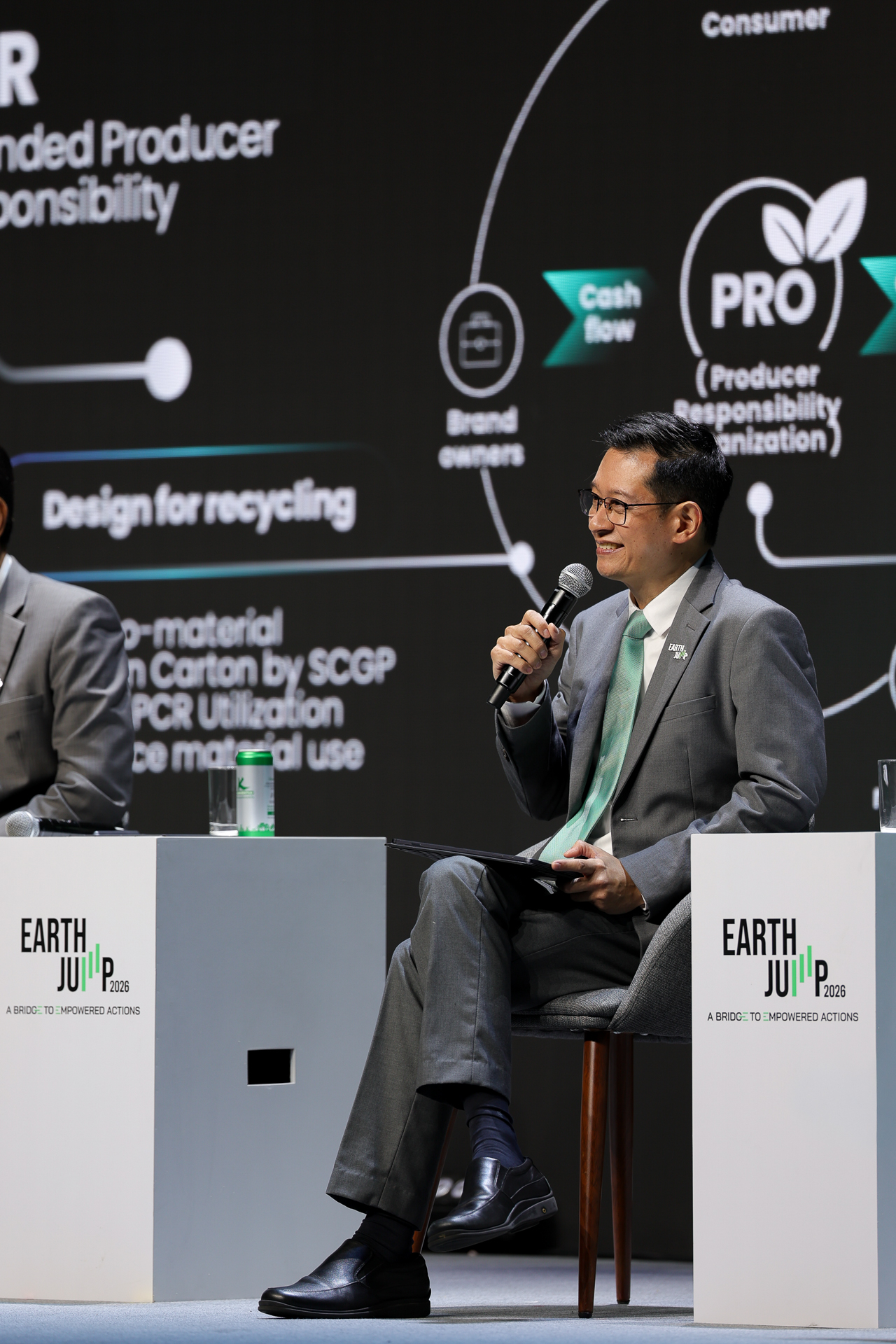
Danaidej Ketsuwan, Chief Financial Officer, SCG Packaging Public Company Limited or SCGP, stated that the packaging industry is facing significant changes driven by environmental regulations and growing sustainability demands worldwide. One key development is the implementation of Extended Producer Responsibility (EPR) regulations, which require manufacturers and importers to take responsibility for packaging throughout its post-consumer lifecycle. This serves as a strong signal for the industry to shift its role from focusing solely on production to managing resources across the entire value chain, while developing new solutions to meet customer needs and enhance competitiveness.
SCGP has proactively adapted to these emerging global requirements through its Design for Recycling approach, which focuses on reducing material usage and considering recyclability from the design stage. For example, Go-Pak UK Limited, SCGP’s foodservice packaging business in the United Kingdom, has focused on reducing EPR costs by developing more environmentally friendly packaging. This includes the use of rPET (Recycled PET Resin) for recyclable plastic packaging and recycled paper for non-food-contact applications such as coffee cup sleeves. In addition, the company has developed a Recycling Network under the Individual Producer Responsibility (IPR) principle to systematically collect and recycle used packaging materials.
Danaidej further explained, “Packaging serves at least three functions: 1) Protect products, 2) Preserve product quality, and 3) Promote and communicate product value. However, once these functions have been fulfilled, the responsibility of the industry does not end. The best approach to managing used packaging is to maximize its value through reuse or recycling. This is the essence of the Circular Economy. Today, SCGP has developed paper packaging that is 100% recyclable, and 93% of the raw materials used in its paper packaging business are recycled materials.”
Beyond regulations and compliance requirements, consumer behavior is another important factor shaping the future of the packaging industry. SCGP sees growth opportunities through four major trends: 1) Aging Society, where consumers place greater emphasis on health, convenience, safety, hygiene, and transparency; 2) Pet Harmonization, where pets are increasingly treated as family members; 3) Digital Transformation, which drives demand for faster and more relevant information, with packaging serving as an important communication channel; and 4) Sustainability, where consumers increasingly seek opportunities to participate in reducing environmental impacts.
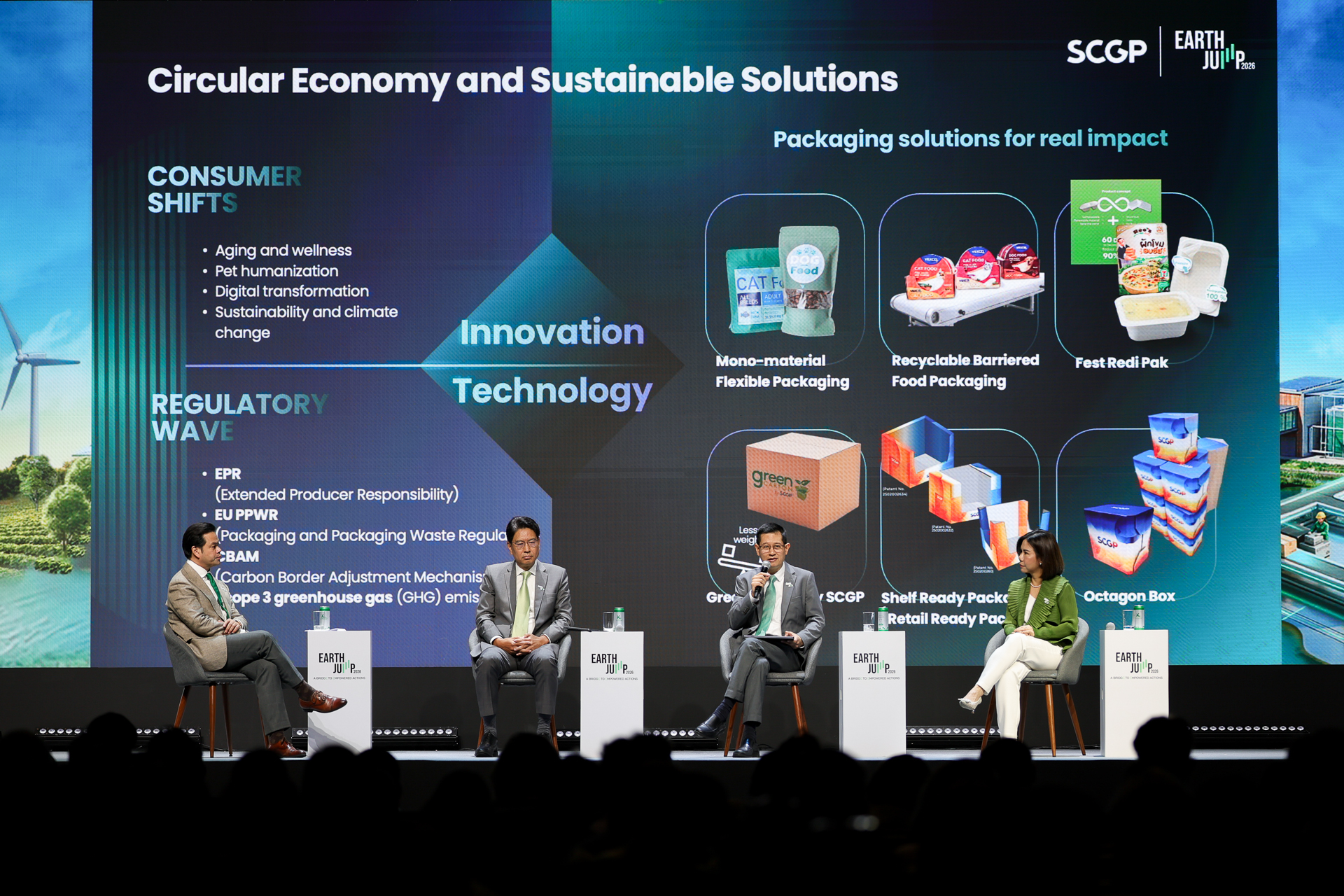
In response to these trends, SCGP continues to develop innovations and technologies in collaboration with customers to deliver products that meet the needs of consumers and global markets. Examples include Mono-Material Flexible Packaging, a flexible packaging solution made from a single type of plastic that is easier to recycle, and Fest Redi Pak, a chilled, frozen food, and ready-meal packaging solution made from fiber coated with a plastic film that can be peeled, separated, and disposed of for recycling, encouraging consumer participation in environmental stewardship.
In the paper packaging segment, SCGP has also developed Green Carton by SCGP, an innovative corrugated packaging solution that has been continuously improved for more than ten years. By utilizing advanced technologies, the company has reduced paper usage and box weight while maintaining performance, helping lower energy consumption in production and transportation as well as reducing overall costs. Other innovations include Shelf-Ready Packaging, which can be opened along perforated lines and placed directly on retail shelves upon delivery, and Octagon, an eight-sided box design that enhances transportation strength while reducing material consumption. These examples demonstrate how innovation and technology can create added value, improve resource efficiency, and reduce environmental impact.
At EARTH JUMP 2026, representatives from various organizations shared perspectives and collaborative approaches to accelerate tangible action, or Commit, while strengthening competitiveness, or Compete, in the evolving business landscape. At the organizational level, businesses must plan and adapt operations across their supply chains to reduce risks, improve resilience, and create growth opportunities. At the industry level, advancing the Circular Economy requires cooperation from all stakeholders, including packaging manufacturers, brand owners, government agencies, distributors, waste management service providers, and consumers, to collectively build a packaging ecosystem that is both competitive and sustainable.