
Your answers Changing Game with Market Fragmentation Loading Data… In the earlier days of marketing, customers were usually divided into distinct “segments” based on age, gender, lifestyle, or geographic location. Today, however, the market has changed so much that segmentation no longer works well. Asst. Prof. Dr. Ake Pattaratanakun has told Your Answers that market fragmentation is extremely challenging, because the same customer may demonstrate different personas and lifestyles across different platforms. No to “DASHBOARD”, Yes to “DATA” While data are important to modern marketing, they can’t be used just for simple dashboards. Marketers need to look beyond whether they are selling well or whether customers like their offers. In the age of market fragmentation, “customer insights” are key. “For instance, on Instagram, a customer might be a ‘foodie’ who constantly seeks out fantastic dishes to show off to friends. However, when that exact same person switches to Facebook, they may only be interested in sharing academic knowledge. So, what type of person are your customers exactly? The answer is that both these versions are their genuine selves,” Asst. Prof. Dr. Ake says. This presents a major challenge because it requires marketers to understand the different lifestyles connected to each platform. When people engage in various digital spaces, their passions may be presented differently. Marketers, therefore, must realize that data gathered from one platform can’t be used to definitively predict or judge the behavior of that same customer on another platform. Such complexity goes beyond what even capable professionals can manage alone. That is why marketers must leverage artificial intelligence (AI) to analyze big data from various platforms for accurate insights. Go for “MEANINGFUL”, Not “MICRO” Many brands think a niche market is unprofitable. Their belief is not entirely accurate, because marketing focused on a very small group of customers can be successful. With “meaningful marketing”, there are customers who are willing to pay more and prove more loyal. Clear examples can be found in world-class brands like Ferrari. Several luxury watch brands also generate massive income even though their production volumes are so small. Another great example is SCG’s Excella roof tiles. Made from genuine ceramic and fired through an exceptionally high-quality kiln process, Excella delivers rich, fade-resistant color. It therefore provides more than just a roof—it preserves the beauty of the home people cherish. Excella stands as a prime example of a product that successfully captures a small yet deeply engaged market. “Its marketing goes beyond selling a roof for sun and rain protection. It is about offering a finely crafted product for homeowners who value their home’s image and tasteful architectural design,” Asst. Prof. Dr. Ake explains. One Core, Many Expressions If the market becomes fragmented, what should brands do? “Core must be one, but expression can be many,” Asst. Prof. Dr. Ake points out. These many expressions are compared to the various business units and diverse products under SCGP’s umbrella. The core of SCGP is its positioning as the partner, which is reinforced through various forms and products. Idea Green offers paper that is gentle on the eyes, while Fest’s food-grade packaging offers quality of life through its high safety standards. When brands successfully uphold their “core,” they can expand boundlessly. To keep the core intact, brands must not engage in “things that do not align with their identity.” No matter how interesting those things seem, they need to stand their ground. No Longer Segments, but Fragments— Down to the Finest Sub-fragments In the near future, the market will become increasingly fragmented to the point of sub-fragmentation. Marketing approaches that rely on gut feelings, past experiences, or broad generalizations will then become ineffective. Marketers thus must transform into marketing data scientists, because their jobs will require constant data analytics for a chance to tap into new markets. In the age of market fragmentation, fear not the niche. Fear the unclear. If we use new tools while upholding our core and principles, market fragmentation can be our empowering opportunity. News Release ดาวน์โหลด เนื้อหาที่เกี่ยวข้อง Loading Data…
Tag Archives: spotlight
Strong Team is Ready to Tackle Challenges!
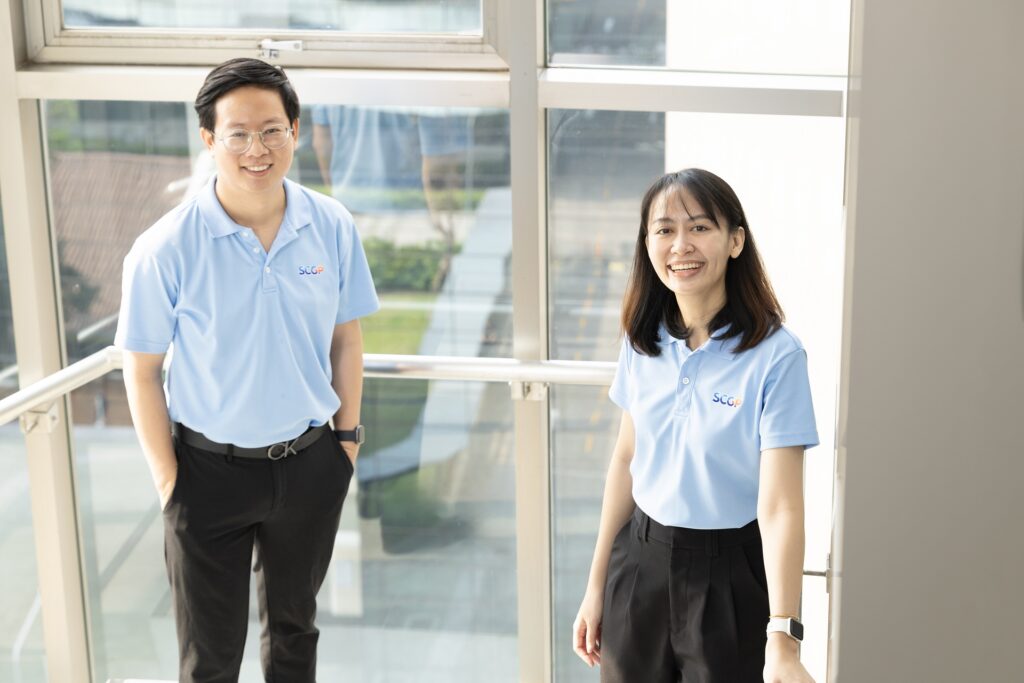
Strong Team is Ready to Tackle Challenges! Loading Data… a LOT interviewed two members from the newly established team, Smart Industrial Solutions, about its role in creating value, including financial value from SCGP’s internal innovations and technology and empowering Thai industries. Our interviewees shared their perspectives on learning and work, which enabled them to fulfil their big missions. Supinya Supajam (Fan) Manager – Smart industrial Solutions “My team has provided innovative solutions related to power plant service to external customers with the aim to uphold their plant reliability, which in turn ensures that our customers’ machines will be able to work more efficiently without any interruption. “In the face of changing work environment, we have to adapt and learn more. For example, we need to be able to use Generative AI and write prompts so that we can keep up with new market trends. Also, we are responsible for sales and represent our company. Aware that what we do or say affects our company’s image, we always keep our words. It’s a way to build customers’ trust. If we say we can deliver products now, delivery must be made right away. Sometimes, we may need to sacrifice our time to assist customers when they have a problem to prove that we are truly reliable. “Passion is important too. When we first entered the market, we were really worried. Yet, whenever we looked for support, seniors really had got our back. When we asked for advice from specialists, they were keen to help. So, we are no longer worried but ready to move ahead together now.” Thitipat Charoenkitsupat (Ball) Account Executive “Our team serves as a coordinator between our plants and all relevant internal units and customers. Our solutions are customized like tailor-made suits, not ready-to-wear stuff. We study our customers’ needs and explain them clearly to plants to develop the right applications and foster a proper ecosystem. “I have adapted significantly because my job details have changed a lot. In the past, I sold paper. But today, I am selling industrial solutions. Communications become more formal. So, I now focus on grasping opportunities, accumulating insights, gathering pain-point data, and looking for the right engineering teams to develop proper solutions for customers. “Importantly, we need to listen well to our customers and communicate in the same language. If customers find us easy to understand and aligned with their perspective, work flows seamlessly. We must build customers’ trust by proving to them that we are reliable. That’s how we stay top of mind. “Also important is the back-up team that supports our efforts to develop solutions for customers. As our products or solutions are novel, we used to be worried. However, whenever challenges arise, we receive full support from the back-up team. This gives us confidence and the courage to push forward in pursuit of success.” News Release ดาวน์โหลด เนื้อหาที่เกี่ยวข้อง Loading Data…
Jorakay Corporation Incessantly Conducts Business on Sustainability Principles
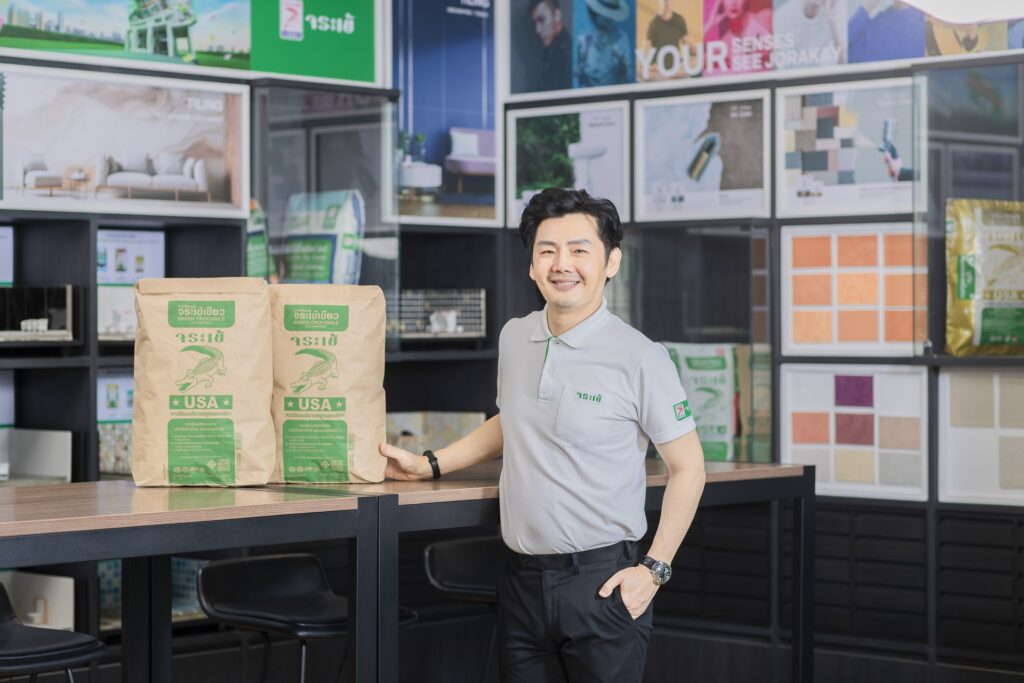
Jorakay Corporation Incessantly Conducts Business on Sustainability Principles Loading Data… Jorakay has always operated its business with an ESG focus, which is integrated into its product development, raw-material selection, production process, and product usage. Its latest sustainability innovation, Jorakay Green Pack, comes out of its collaboration with SCGP. Mr. Woraphot Tangmanuswong, Vice President-Marketing at Jorakay Corporation, said his Thai-national company has been growing throughout its 33-year journey because it is committed to presenting innovative and quality construction products that are functional, elevate quality of life, and reduce environmental impacts all at the same time. Business for Family’s Happiness “We are a company driven by a deep understanding of our customers’ pain points and needs—whether they are homeowners or professionals in the construction industry. Through continuous innovation and quality development, we ensure that our products truly meet users’ needs and remove their pain points. We have built our company and Jorakay brand with the aim to let them thrive alongside people, the environment, and the planet. To us, homes are not mere structures. They embody happiness for everyone,” Mr. Woraphot said. “‘Jorakay’ is the First Mover in its industry. Our Crocodile Silver Premium Plus++ is the first anti-black mold cement grout in the Thai market. Designed for tile installation, this innovative product integrates anti-black mold technology out of understanding that Thailand’s tropical climate encourages mold growth. This innovation reflects that we don’t look at just raw materials used but also end-user benefits. Our focus has also applied to cement tile adhesive, chemical products, and paints for the construction industry.” 3 Greens in Jorakay Sustainability Framework Because of its commitment to Innovation for Your Family’s Happiness concept, Jorakay or Crocodile has been a favorite among its customers. It knows what customers want and adopts innovations to develop increasingly better products. Mr. Woraphot said his company’s definition of family had now become broader too. “With the broader definition, our Family is about our society, our subdistrict, our district, our province, our country, and even our world. As our family becomes bigger, we pay bigger attention to environmental and social responsibility too. ESG has answered our company’s business vision,” he said. “Our operational strategy therefore integrates Jorakay Sustainability Framework, which has three key components or three Greens. The first, Green People, emphasizes that our staff must be green first. Only when all of our members are environmentally conscious to their DNA, can we help society protect the environment. The second, Green Process, is about eco-friendly manufacturing and work processes. The third is Green Planet. With our contributions, we will see greener families, districts, provinces, countries, and the world.” Partner with Shared Goal for Mutual Growth Recognizing the adverse impacts of climate change, PM2.5 crisis, and other environmental problems, Jorakay Corporation as a manufacturer continues to develop innovations for the purpose of serving environmental benefits. “We are determined to apply sustainability concept to every aspect of our business operation in pursuit of Carbon Neutrality. Jorakay Green Pack is a result of our firm determination. Designed as an eco-friendly packaging, this pack aligns perfectly with Jorakay’s environmental policy. SCGP, an expert in packaging, has long been our partner. We have also shared the same green vision or the aspiration to curb environmental impacts. That’s why we worked together in developing Jorakay Green Pack based on Circular Economy concept. Our paper packaging is made mainly from recycled materials. Therefore, we have supported circular materials and reduced the usage of new resources,” Mr. Woraphot said. “We will continue to develop our products across all categories in response to the growing demand. Our green philosophy will also extend far beyond Jorakay Green Pack, as we intend to operate our business for a sustainable planet by offering more eco-friendly products. If our partner shares the same focus on environmental care and sustainability, we are always ready to embrace recommended innovations that resonate with our business philosophy,” Mr. W News Release ดาวน์โหลด เนื้อหาที่เกี่ยวข้อง Loading Data…
Anirut Na Nan Takes Up the Mission of Ensuring Everyone Works Happily
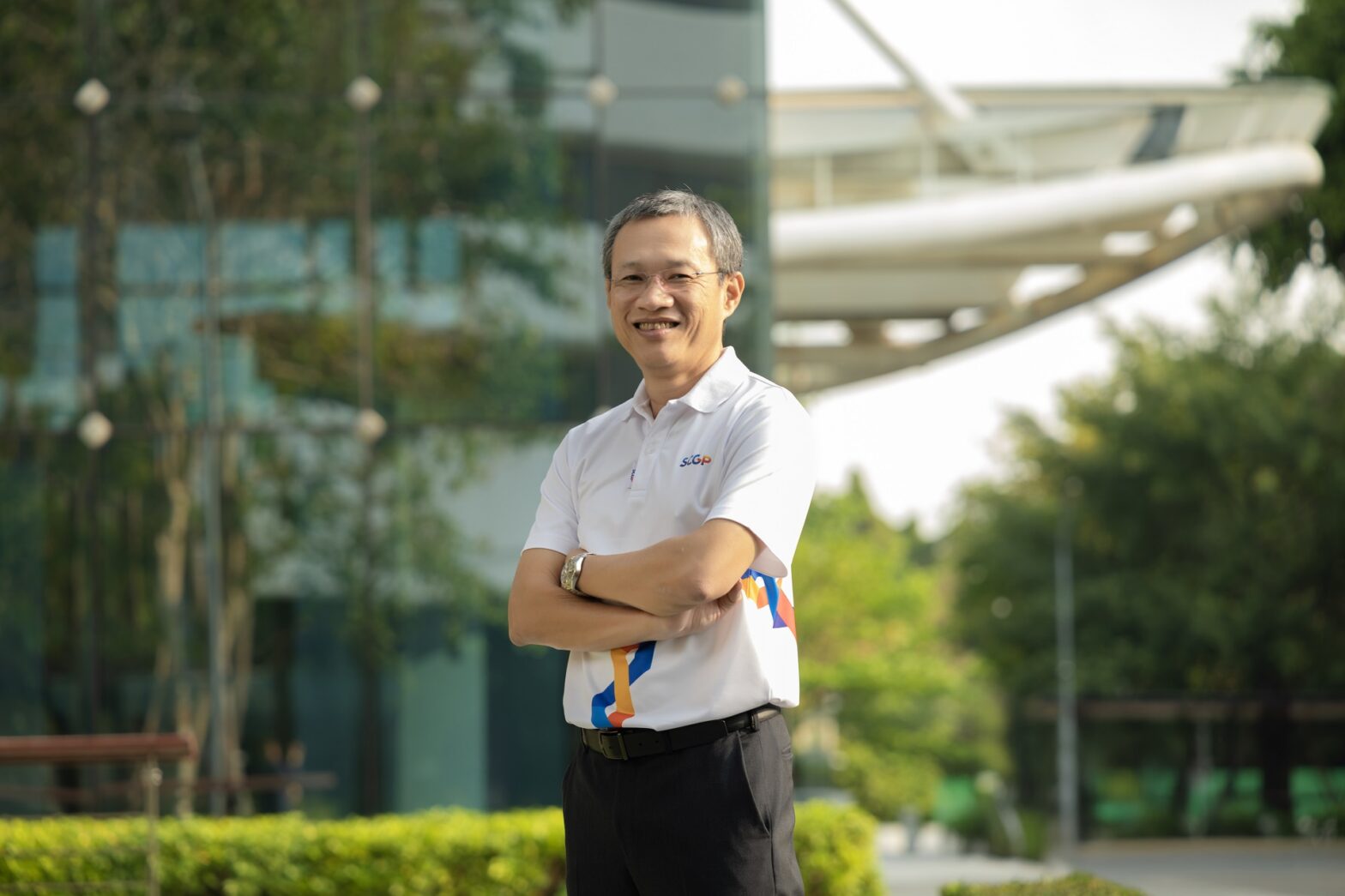
Anirut Na Nan : Takes Up the Mission of Ensuring Everyone Works Happily Loading Data… Because SCGP really cares about its people, a LOT recently sat down with Mr. Anirut Na Nan, People Caring Director, to listen to his approach in managing the company’s multigenerational workforce and ensuring all people at the company have necessary skills, collaborate, and get well-prepared for the new-age business landscape – all while upholding their happiness. Absorb the Practical Way of Working Mr. Anirut began his HR career under the Building Materials Business before moving on to the Ceramics Business and then to various other companies under SCG or its joint ventures with foreign business operators. As a result, he has accumulated work experience in various countries, including the Philippines, Indonesia, and China. Through these experiences, he has gained insights into different work methods, perspectives, and management approaches. “I had been responsible for both HR management and administrative functions, which allowed me to interact with people from diverse backgrounds. Experiences and lessons from those years can still apply today in many aspects. For a certain period of time, I worked with Japanese people and noticed their dedication, attention to detail, and teamwork. They also had a very clear work process. So, they knew what needed to be done and what they needed to deliver. The process clearly specified the person in charge and what information would be needed to complete the task. The Japanese also held discussions to explore solutions. Meetings were held on a daily basis, lasting about half an hour to address problems the team encountered yesterday to get solutions today. That’s the Japanese style. I have used such approach too. Discussions are held not to blame anyone, but to find a way to get jobs done,” Mr. Anirut said. Business Transformation Requires People Transformation “Over a decade ago, I was transferred to SCGP around the time the Pulp and Paper Business was preparing for its transformation. On the HR front, the company needed to do many things for the transformation and team formation so that the company’s businesses could evolve. Also, we handled HR system, organizational chart, and the work format of each unit as well as each new business. Our planning focused on not just business needs but also our people’s mindset. All our young staff knew full well at that time that the HR team was a crucial factor in the company’s transformation. We needed to put in our efforts. Because we pulled through that period, our company is getting strong once again today.” People Caring Makes Employees Happy in Every Stage of Their Lives “SCGP has named its HR Department ‘People Caring’ Department because our executives believe that happiness will be the key concept in the new-age HR management as well as related functions. How can we ensure that our staff are working happily then? Older staff, especially supervisors at all levels, have a role to play here because they are the persons younger staff will turn to when coming across a problem. From People Caring perspectives, people are assets. We also must understand that people are humans with preferences, anger, and love. To make everyone happy, we must talk and listen to one another. “People caring pays attention to employees’ lives since they started working for the company. We have prepared their training, development, and learning opportunities in order for them to excel at work and enjoy career advancement. We have managed their wages, remuneration, and welfare. We take care of them until their last workday, making sure they work happily together no matter what their age. With these concepts in mind, SCGP has improved its guidelines and regulations as well as redesigned its training and employee development. For our retiring staff, we have tried to ensure they are ready for their retirement life by providing financial management training and advised them about rights and benefits related to social security scheme as well as the universal healthcare scheme. We have also updated them about possible threats from call-center scams. We have even invited police speakers who share real-life cases with our staff to boost their immunity. “Today, HR management is much more challenging than before. As technology has evolved fast, we need to ensure our employees keep pace with the changes. Our training must enable our staff to leverage technology for better performance. More senior staff, through communications, have also tried to highlight the importance of technology adoption. AI, for example, is a good tool. It is not here to replace people. But if you don’t learn to use it, other people who know how to use it will replace you. SCGP’s people development now requires all employees to develop their AI skills. It’s just that their training programs may be different, as contents will align with their job responsibilities.” Look for Opportunities from Changes “Getting new assignments or job responsibilities comes with huge learning opportunities. It paves the way for us to meet capable people, see and understand different work approaches, and acquire connections that will be meaningful for future collaboration and career. “Also, I would like to recommend all employees to pursue self-development. Only you can make it happen because the company can just provide support. Today, the world has been changing so fast. That means if you stay the same, you are falling behind. We always need to keep up. The more we develop ourselves, the more opportunities we create for ourselves. “Last but not least, don’t be shy about trying to learn something. Don’t think that you’ll lose face if you ask for knowledge about technology or other subjects from those who are less senior or younger. We must acknowledge that the younger generation grew up with technology. Learn from them and apply what you learn. If it works well, develop and improve it further. If it doesn’t, take it as a lesson and avoid repeating the same mistakes next time,” Mr. Anirut concluded. News Release ดาวน์โหลด เนื้อหาที่เกี่ยวข้อง Loading Data…
Neurotech and Telepathic Payment: Technologies That Could Transform the Future

Spotlight Neurotech and Telepathic Payment: Technologies That Could Transform the Future Loading Data… Have you ever noticed how rapidly our world has evolved over the past 10-20 years with new technologies completely changing human life? And in the future, our world will undergo even more dramatic transformations, making today’s technology potentially obsolete overnight. “Neurotech” Lets You Control Everything with Your Mind Neurotechnology is about studying, analyzing, and interacting with the human nervous system and brain. Combining neuroscience with cutting-edge technologies such as artificial intelligence (AI), robotics, and brain-computer interfaces (BCI), neurotech is continuously evolving, with applications spanning various fields. A prime example is Elon Musk’s Neuralink, which is developing Neural Implants — brain chips that enable direct connectivity between the brain and computers or the internet. In the medical and healthcare sector, BCI is being used to help paralyzed patients control robotic limbs or type messages using brain signals. Moreover, several inventors are integrating neurotech into the development of devices that are designed to analyze stress, depression, and emotional states through brain signals, paving the way for a better understanding of human emotions. Neurotech, moreover, contributes to gadgets that could stimulate the brain for better concentration, memory, and learning efficiency. In fact, this innovation even has a role in VR game development as the next-gen games may enable players to control characters with via brain signals. Looking ahead, experts predict the rise of Hybrid Intelligence, where human brains are directly connected to AI, significantly accelerating information processing. Furthermore, advancements in Mind-Reading Technology could enable the real-time translation of brain signals into text or commands. If fully developed, Neurotech could redefine human interaction with technology, but concerns remain regarding ethics, privacy, and security—especially the risk of brain data hacking. Without stringent regulations, unauthorized access to neural information could become a major issue. “Telepathic Transaction” is Possible with Neurotech One of the most anticipated applications of Neurotech is in financial transactions, where payments could be made through thought alone—without the need for physical contact or devices. This concept, which has gained traction in the Fintech industry, explores ways to integrate brain signals into financial transactions. A key approach involves using Brain-Computer Interfaces (BCI) to interpret brain signals as commands for digital payments. The vision for Telepathic Payments involves linking digital wallets to BCI, enabling users to authorize transactions through thought alone. Additionally, blockchain technology could be integrated to enhance security and transparency in telepathic transactions. While Telepathic Transactions are not yet a reality, experts predict that within 10 to 20 years, initial trials could begin. If telepathic transactions can really be conducted one day, it is extremely necessary to address security concerns. Reading brain signals, after all, may lead to unintentional transactions and be vulnerable to hacking. Therefore, there must be legal protections in place for thought-based transactions. Examples of Neurotech Applications Elon Musk’s Neuralink has developed “N1 Implant” or a brain chip that directly connects human brains to a computer, allowing paralyzed patients to control a computer or an electronic device via their mind. Kernel has invented “Kernel Flow”, a helmet-like device that studies brain functions such as memory, creativity, and mental states without the need of an implant, in support of neuroscience and mental health research. Blackrock Neurotech has created a BCI-based invention, “NeuroPort Array,” for the rehabilitation of paralyzed patients. Backed by AI, it enables users to control robotic limbs or type messages through telepathy. Reference: Digital planet from a LOT Vol.35 News Release ดาวน์โหลด เนื้อหาที่เกี่ยวข้อง Loading Data…
4 Trust Building Rules & 4 Crisis Management Rules
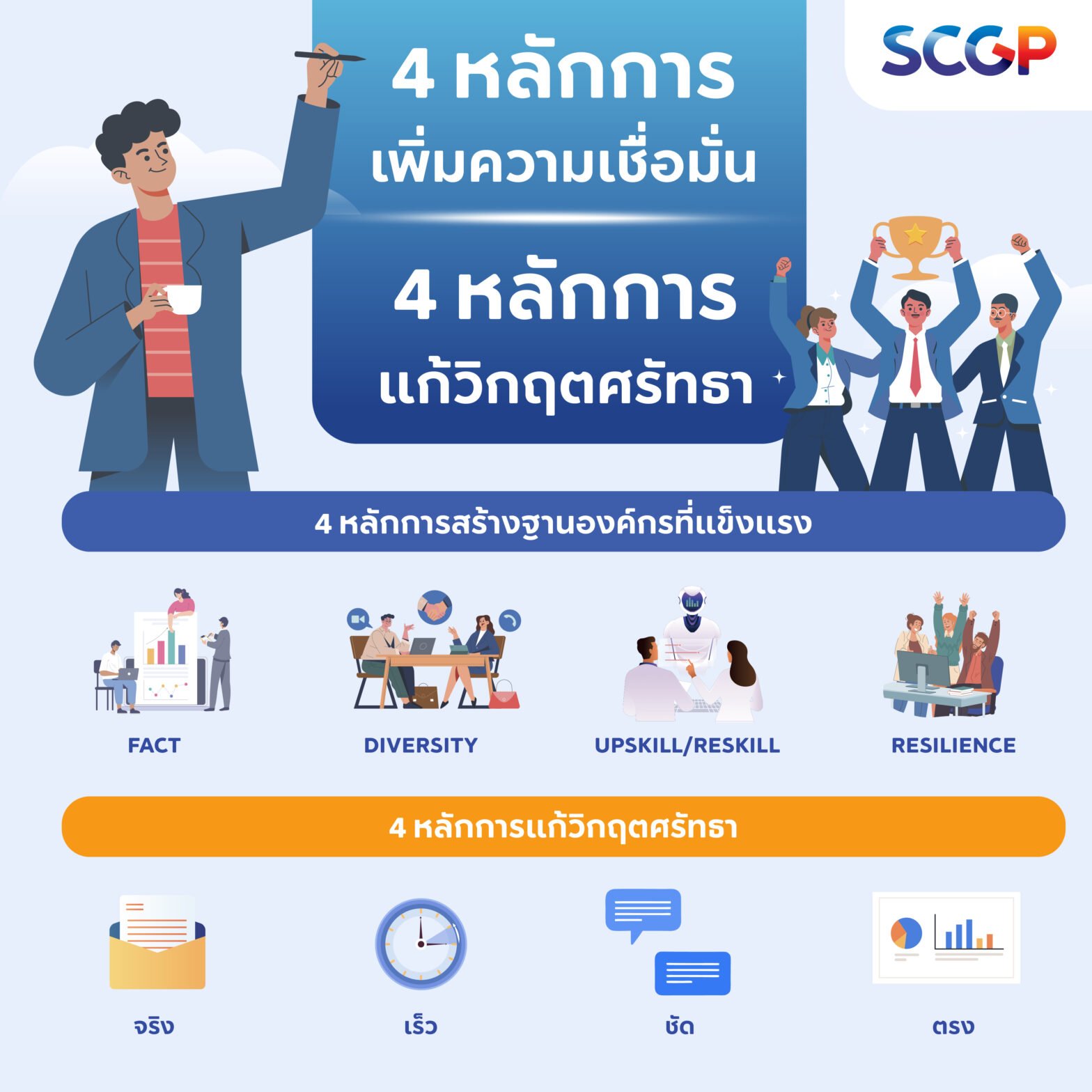
Spotlight 4 Trust Building Rules & 4 Crisis Management Rules Loading Data… In the face of volatile economy, maintaining trust requires careful management. Once trust is lost, regaining it can take a long time and directly affect business operations. Your Answers has recently sat down with Asst. Prof. Dr. Ake Pattaratanakun to explore guidelines on how organizations can sustain trust. He recommends 4 rules to help businesses stand firm amid uncertainty. 4 Rules for Organizations’ Firm Foundation When an organization loses trust, the consequences can be detrimental in every aspect. Assoc. Prof. Dr. Ake thus emphasizes that it is necessary to build a solid foundation from within. This can be achieved through 4 principles: Fact, Diversify, Upskill/Reskill, and Resilience. Fact holds key to organizations’ efforts to manage situations effectively. Organizations, after all, need accurate, precise, and comprehensive data, especially during times of panic or uncertainty. Incomplete or incorrect information can lead to poor decisions, worsening the situation. Organizations thus should invest in data collection and analytics, paying attention to not just national and global news but also social trends. With modern technology making fact-checking more challenging, using Social Listening Tools can help executives better understand situations. If a brand faces negative publicity, these tools can assess whether it is a minor issue that can be overlooked or a major crisis requiring immediate action. Accurate facts are the important basis of sound decision-making. Diversify is a key principle for risk reduction. Enterprises that rely on a single revenue stream are highly vulnerable to industry disruptions. For example, auto mechanics specializing only in internal combustion engines may lose their importance as the market shifts toward electric vehicles (EVs). Businesses, therefore, must plan ahead and develop contingency strategies. Those that diversify and expand into new businesses will enjoy greater security and get better equipped to deal with unexpected changes. Upskill/Reskill is at the heart of organizations’ capability building. Their members at all levels, from employees to executives, must continuously learn and develop new skills. As the business landscape evolves rapidly, organizations that fail to adapt will be left behind. For instance, executives unfamiliar with fundraising may need to study and acquire an understanding of global financial markets, while employees unaccustomed to AI must learn to leverage the new technology efficiently. Professional standards in various industries are constantly changing too. Accountants, for example, must stay updated on new practices and new forms of assets in the wake of technological disruptions. Only organizations that adapt well and constantly upskill/reskill will maintain a competitive edge. Resilience, the ability to recover and adapt quickly, is another key factor. No organization is immune to problems and setbacks, so the ability to fail fast and bounce back is critical. In the future, speed and flexibility—also known as agility—will play a crucial role in organizational management. Traditional corporate cultures that punish mistakes can create environments that stifle learning and innovation. Encouraging employees to experiment with new ideas and recover quickly from any failure, on the other hand, will strengthen the organization. Same Mindset for The Whole Organization The aforementioned 4 rules must be more than just concepts—they need to be implemented at every level of the organization for systematic, adaptive, and effective management. Organizations must communicate these principles clearly so that all employees adopt the same mindset. Resilience will happen only when members realize that mistakes are learning opportunities rather than career setbacks. Shaping employees’ mindset can be achieved in various ways, such as rewarding those who overcome failures and develop effective solutions or hiring young professionals whose perspectives align with the organization’s direction. “True, Fast, Clear, Relevant”: 4 Crisis Management Rules When an enterprise falls into a crisis, the most important things are to maintain credibility and efficiently solve the problem. The “True, Fast, Clear, Relevant” rules will enable enterprises to respond professionally to negative rumors and situations. “True” here means enterprises must release facts about the situation. If they are responsible for mistakes, they must admit it sincerely and show responsibility. “Fast” means enterprises must quickly respond to the situation. As rumors and public sentiments can rage on like wildfires, a slow response, therefore, may mean the situation may finally become uncontrollable. “Clear” requires that enterprises communicate in a straightforward and concise manner. “Relevant” is about catering the messages properly to target groups. For example, investors will want reassurances, transparency, and proper response plans. Customers, meanwhile, will expect enterprises to show the ability to continue delivering value and good services. Summary: Trust needs to be built and managed. 4 trust-building rules—Fact, Diversify, Upskill/Reskill, and Resilience form a strong foundation for business stability, while the “True, Fast, Clear, Relevant” approach enables organizations to navigate crises and restore credibility fast. By implementing these strategies, businesses can adapt to change and grow solidly in an unpredictable world. Reference: Your answers from a LOT Vol.35 News Release ดาวน์โหลด เนื้อหาที่เกี่ยวข้อง Loading Data…
“Reclosable common footprint Carton” open-close fruit and vegetable packaging from SCGP

News “Reclosable common footprint Carton” open-close fruit and vegetable packaging from SCGP Loading Data… In the first 4 months of 2023, the overall value of fruit exports in Thailand reached 1.03 billion baht. Durian, longan, as well as mangosteen, are highly consumed by both Thais and foreigners. Nowadays, many fresh fruits are damaged or simply called “bruised” while transportation. This may be partly due to the packaging that is not conducive to protecting high-quality fresh fruit. Fruits and vegetables must be free of impurities The beginning of this project came when a major fresh fruit supplier, Organic Food Mart, decided to consult SCGP. In the past, most fresh fruit packaging was a form without a lid but with a connection that could be stacked on top of each other. As a result, it will be damaged or impured during transportation. The goal is to ensure that customer packaging can protect the product as much as possible from the transportation process to the consumer’s hands. Concern all aspects SCGP designer, Mr. Wanchana Sritrairattana, started their design by selecting the right packaging size for their products, which consisted of a variety of fruits and vegetables. Not specifically. By choosing a square-shaped box for one-round transportation. Both in terms of space and volume of products, it is the most cost-effective, as well as based on ergonomic principles to make it comfortable to lift and move. Fruit and vegetable packaging from SCGP has the advantage that it can be open-closed. The lid of the box folds together, but what is more special than normal natural packaging is that it has a lid attachment. There is no need to worry about spoiled fruits and vegetables because SCGP does not neglect small elements such as ventilation holes by letting SCGP’s expert team calculate the ventilation hole distance on the box so that it can be placed side by side. Air can also be ventilated through all packaging while in transit. And determine the size of the ventilation hole to suit each type of product to maintain the quality of the product in the most perfect condition as well. In addition, SCGP’s design team is not just concerned with shipping damage, but we also thought far away into bringing fruit and vegetable box packaging to be sold in stores and not all were sold. This is because most consumers currently do not buy whole boxes of vegetables or fruits. Sometimes you only buy a few pieces. That means there will be some left inside the package. However, fruit and vegetable packaging from SCGP can be reused. Preserve the quality of those vegetables and fruits very well. Plus, you can turn it on and off as many times as you want without fear of breaking it. Wide range of packing The pattern around the packaging, the graphics team wanted it to be neutral. It can contain both fruits and vegetables according to the customer’s requirements, and with materials that meet SCGP standards, this Packaging can be used to contain other items of similar weight. Quality of SCGP’s Reclosable common footprint Carton open-close fruit and vegetable packaging has been awarded the Asian Award. Asia Star, the category of Transport Package If any entrepreneur wants to transform their packaging to be of high quality, standard, sustainable, and reusable. You can consult or inquire for information from SCGP. Related Contents Loading Data…
Fest Woodenware Cleanness, Safety & Environmental Sustainability
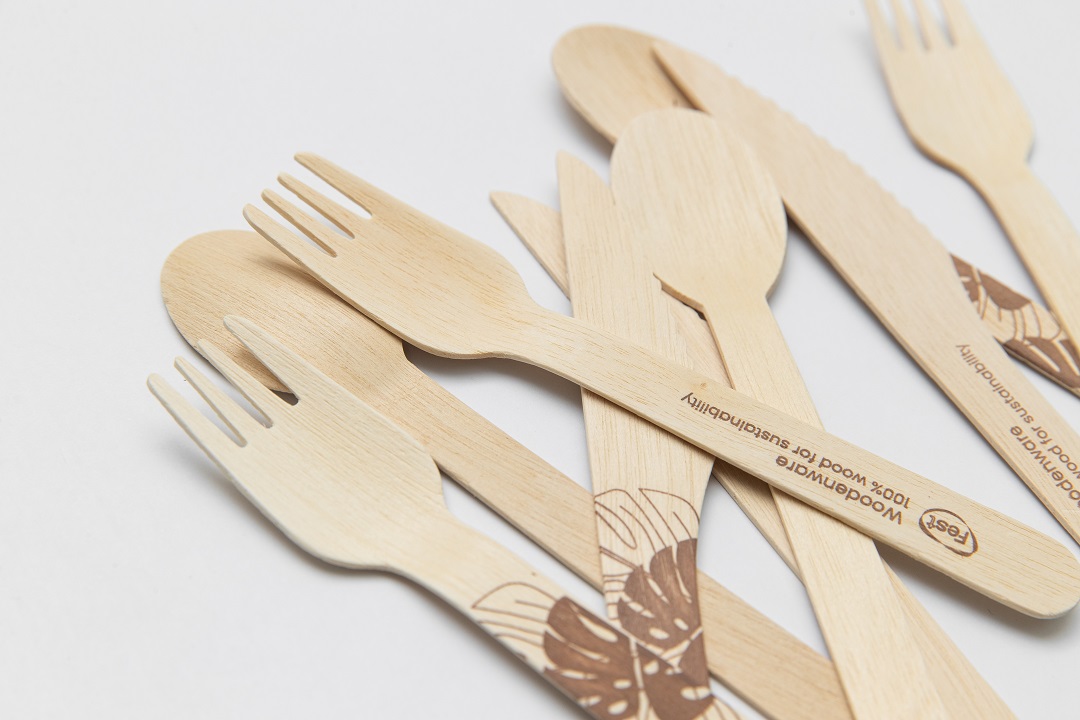
News Fest Woodenware Cleanness, Safety & Environmental Sustainability Loading Data… “Spoon and Fork” are eating utensils for every meal. If we order takeaway food, such cutlery will also accompany our dishes to ensure our convenience. As green trends grow, people become increasingly aware of environmental issues. Wooden spoons and forks thus prove interesting alternatives to restaurants that want to position themselves as sustainability leaders. Fest Woodenware is designed in 3 shapes and 3 styles under the concept International Cuisine that is different according to the eating culture of each nation, including China, Korea, and the West. Each nation has different styles of spoons, oranges, and knives that have different shapes and usage patterns. Fest is considered the leading manufacturer. The first and only one in Thailand that can produce wooden spoons, forks, and knives to comprehensively meet the needs of different uses. Being supportive of farmers who can earn extra cash from growing trees in vacant land plotsBeing made of fast-growing indigenous trees (3 – 5 years) from commercial forestry plantations, which are renewableBeing durable and suitable for all types of foodBeing clean and safe, free from hazardous chemicals, and food-gradeBeing friendly to the environment and 100% biodegradableBeing certified based on BRC Global Standard for Packaging and Packaging MaterialsBeing able to fit into many shapes with added value for brandsAccommodating optional logo printing and special-set servicesUsing modern manufacturing technology and compatibility with various types of woodHaving the capacity to produce 200 units/year Related Contents Loading Data…
“United Container” Drives Business with Technology and Environmental Care
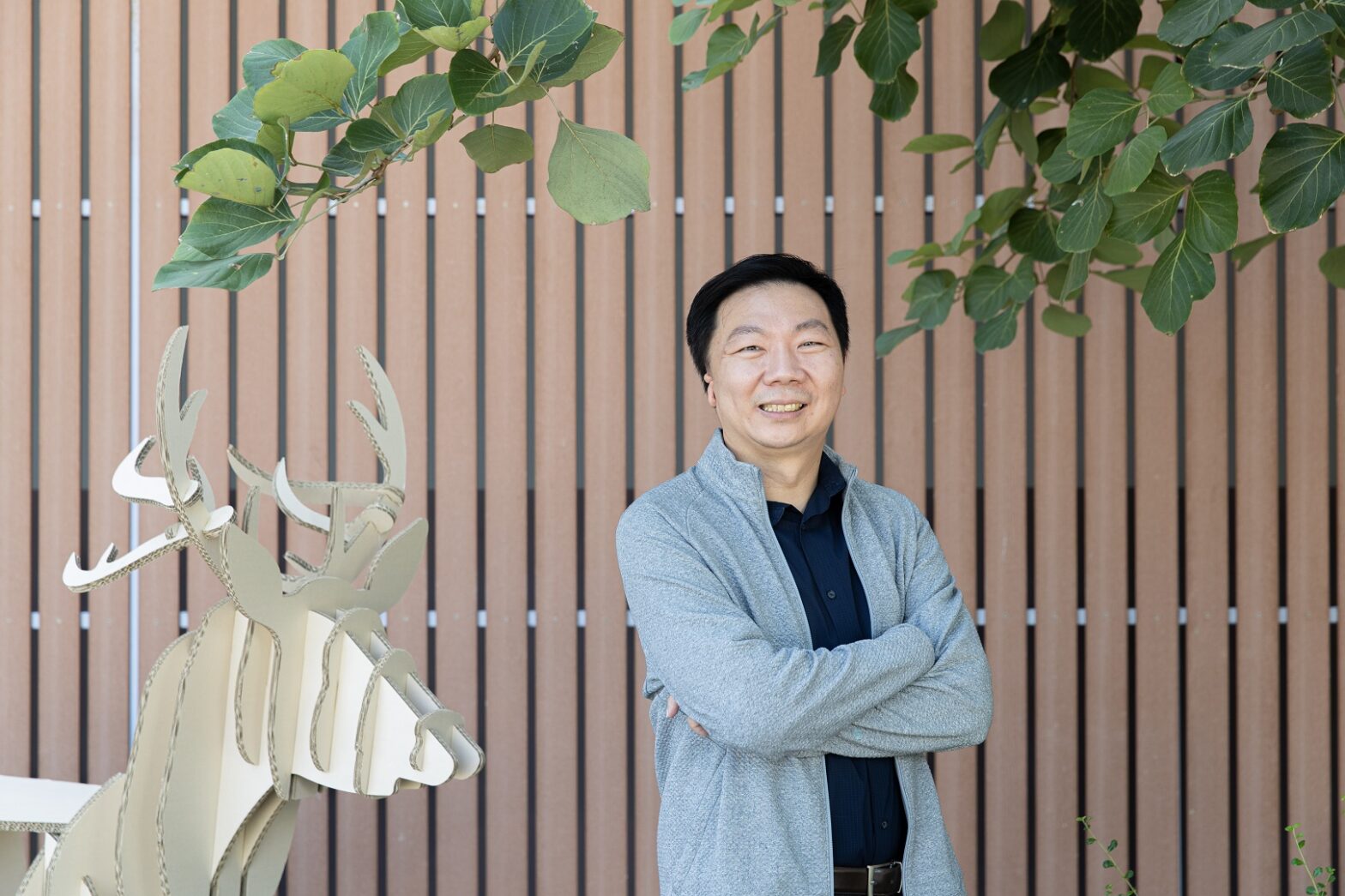
News “United Container” Drives Business with Technology and Environmental Care Loading Data… Successful business operations require considerations for society and communities to pave the way for happy co-existence. This is the work philosophy of Mr. Thatchai Piyakulchaidet, Managing Director of United Container Company Limited. His company therefore does much more than just delivering quality to customers. Focus on Target Groups & Roar Ahead United Container has evolved from a family business, established by Mr. Thatchai’s parents. Initially, the operation was based at the family’s home in Bangkok’s Lat Phrao – Bang Kapi area, was mostly manual, and staffed with just one worker. But the business grew over time. In 1992, it set up its current factory in Pathum Thani. “We have mainly provided corrugated-paper packaging for niche markets. Our customers are those looking for high-quality packages and a reliable supplier such as exporters of processed foods, electronic parts, or auto parts. These target groups need durable packaging and punctual deliveries,” Mr. Thatchai explained. “With clear focus, we have prepared our factory, machinery, and raw materials in response to customers’ needs. We think it is best to specialize to fully fulfill our target groups’ specific requirements. Through such approach, we have developed expertise and greater understanding of customers’ needs. That’s how our products and services serve our target groups best,” he continued. Tech Update & People Capability Behind Product Quality In the competitive business environment, a business will be sustainable only when it delivers quality and wins the hearts of customers. These two key elements exist where internal management is efficient. “It’s a challenge to fulfill each of various orders – with diverse requirements – without any mistake. We have supplied custom-made packaging. So, most orders are different each day. It is also our duty to ensure timely deliveries. To exporters, delivery time is very important because container loading time is fixed. By addressing customers’ pain point, we give them peace of mind and time to focus on other aspects of their work,” Mr. Thatchai said. “Not only that I have studied engineering and programming, but I have also had a passion for coding from a young age. During my childhood, my time at my dad’s factory showed me that software in fact could solve many problems and set up efficient work systems. United Container therefore has never stopped developing software and integrated information technology. “We have built our business sustainability by keeping pace with technology and developing new software for use at our company. Thanks to such efforts, we can reduce the risk of problems and dependence on specific staff’s expertise. For example, our factory has a real-time output recording system. Our staff therefore do not need to key in information manually. The system records everything from the start and end of production time, volume produced, downtime records, and production speed. Data automatically recorded by our computer system are then analyzed in support of production/productivity improvement or waste reduction,” he added. “Our machines and technologies have been regularly updated. On top of that, we have used quality raw materials only. Our good standards, waste reduction, efficiency improvement, and cost reduction all have contributed to our competitiveness,” he continued. “At the heart of our business operations are our staff. We believe in good governance and employee care. We have implemented several policies to improve employees’ welfare and quality of life because we believe that our employees’ happiness is translated into good output”. Sustainable Environmental Care “We have placed a strong emphasis on environmental care because we think our business should coexist with communities and the environment. Our environmental care is greater than what is required by laws, with regular reviews in place. We have even imported a wastewater treatment system for 100% water recycling. Our factory therefore does not discharge a single drop of wastewater to local communities,” Mr. Thatchai pointed out. “We have also recycled paper in collaboration with SCGP. We have gathered, compressed, and sent our paper scrap to SCGP out of trust that SCGP will handle it properly. Regarding other types of industrial waste, we have complied with laws. It is buried at an authorized landfill. In our view, mutual coexistence with communities is crucial to business sustainability. “In addition, we have installed full-scale solar cells to generate power for our factory. On a sunny day, we hardly need power from an electricity authority. Our solar installations help curb environmental impacts as well as our production costs, which will also benefit our customers,” he continued. Collaborating with Quality Partners “We have chosen SCGP as our partner because of the latter’s solid quality policy. SCGP is very reliable and supports us strategically. United Container focuses on exporters and suppliers of premium products. Our customers therefore have high expectations. Packaging used for them must be exceptionally durable and delivered through a reliable supply system. SCGP perfectly answers our needs. “Aside, we have braved through several crises with SCGP by our side before. A few years ago, a paper shortage crisis occurred but we had hardly felt any pinches because SCGP took good care of us. When the global market turned highly volatile, SCGP also helped ensure that pricing for us was still reasonable and enabled us to remain competitive. As we produce packaging at reasonable costs, our customers can compete well in their market too. SCGP has always taken good care of us. So, we really are looking forward to growing alongside SCGP in all years to come,” Mr. Thatchai concluded. Related Contents Loading Data…
Turning Your Passion into Values

News Turning Your Passion into Values Loading Data… With technology’s growing presence in our organization, our employees need to learn more about tech solutions for efficient applications. In this volume, four employees shared their perspectives with a LOT after they jointly developed an AI-enabled integrated wood management system – one of SCGP’s key projects. “I am in charge of paper-pulp production. But basically, I am passionate about Data Science, Machine Learning, and AI. I thus always think of how to use my passion for my company. Thanks to our supportive work environment, my initiative could take off. Colleagues are open-minded. Communications are fast and I have fun working. “In the past, our staff measured wood logs onsite to get raw materials. But now, we use AI for measurement. It is possible because my team and forestry unit supported my idea of AI application. This AI solution works well for us, farmers, as well as the environment in the long run because it ensures quality materials for our plant and proper pay for sellers. Farmers naturally pay more attention to their forest plantations for compliance with our AI-enabled measurement system’s criteria.” Nattavut Mekmok TPC Pulp Production Department Manager, TPC “I have long studied and developed data-science models. So, I always look for ways to apply data science to my job. As SCGP encourages innovations and offers learning opportunities, I get access to a sandbox and a reasonable budget to experiment with my ideas. “This project integrates Computer Vision. With the help of CCTV, images are streamed into my model that accurately detects a targeted log and measures its size. The big challenge of this project is quality image enhancement, as we need to train the model and constantly improve its accuracy. Quality is important because the model is really used to facilitate operations and determine money issues for both internal and external parties. My model was simple. I developed it and conducted the proof of concept with my computer. Initially, I just checked if the model could detect a log. Then, I developed it further and further until this project kicked off. I am so proud. I am determined to develop it further.” Phiphatsak Thairatana Supply Chain Analyst – SCGP “It’s quite a challenge to persuade our partners to try and accept our new log measurement system. We have convinced them by showing a comparison between the old and the new systems. We underline accuracy and communicate to boost farmers’ understanding. “To me, SCGP is like a big school. It has taught me many things, including hard skills and soft skills. I now believe in the value of others. With mutual respect, I work happily every day.” Fontip Sornsurad Raw Material and Warehouse Section Manager – TPC Pulp “SCGP has prepared formal and informal communication channels for us to express our opinions and receive advice. So, I have the courage to propose new ideas. Importantly, because all staff are capable, we can learn from one another. As we have shared our perspectives, we have seen the same goal and driven our organization forward together. “I think trust from colleagues, customers, and suppliers comes from how we have treated others. When we deliver good things and solutions, we automatically win trust and credibility. Siwarak Butdee Value Chain analyst, SCGP Related Contents Loading Data…