
Loading Data...
330
Spotlight
AI: From Tool to “Team”
Taking AI in Business to the Next Level
Loading Data...
In the past, marketers often segmented customers by age, gender, or geography. But today, the marketing world does not stick with the traditional “segmentation” anymore. The major challenge for global brands, as a result, is no longer about producing as much content as possible. Every competitor, after all, now has equal access to technology and can generate content just as swiftly.
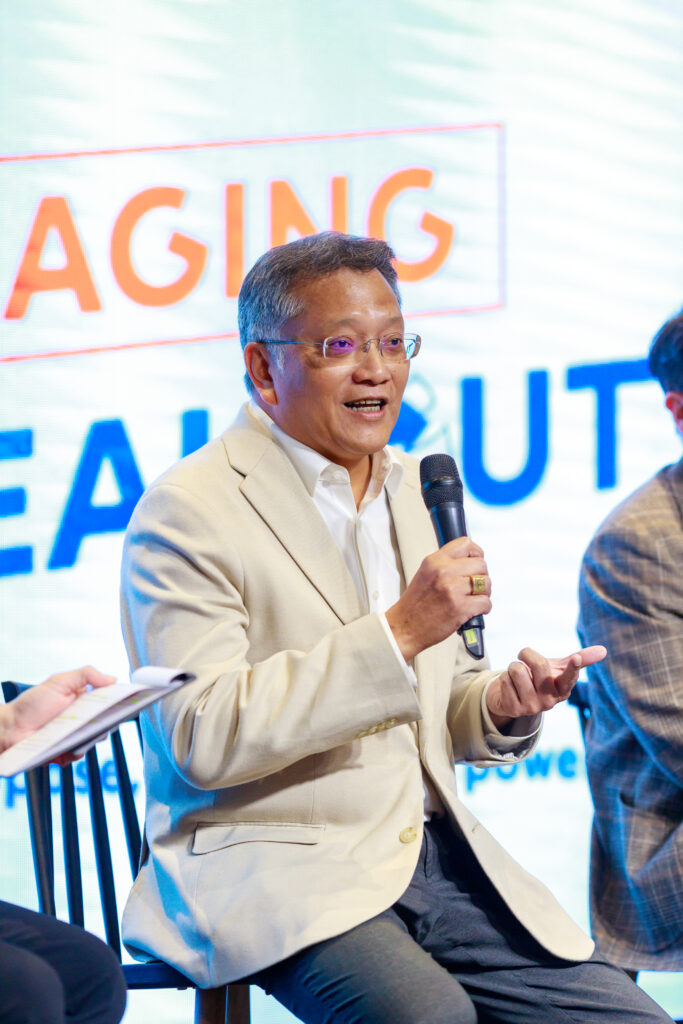
In this volume, Asst. Prof. Dr. Ake Pattaratanakun shares his perspective on how global brands can truly differentiate themselves in an era when virtually every brand can use Artificial Intelligence (AI) to create similar levels of content.
Decision Maker is Newest Team Member
Modern marketing must delve deep into insights. Executives need to realize that the value of content is now depreciating at a rapid pace, because General Generative AI possesses advanced capabilities in language, data depth, and storytelling—to the extent that it can write insightful articles or even craft dramatic narratives that emotionally engage people. In all, content alone is no longer the ultimate metric of superiority.
In the near future, the key focus will lie in Decision Making. Content creation requires someone to set the direction: what should be done, what needs adjusting, and when to communicate. In this regard, Agentic AI can function like a “team member” who helps brainstorm, make decisions, and generate the right content. It knows the proper timing, the right methods, and what should or shouldn’t be executed. Clearly, AI has been evolving from a tool to a strategic partner that can even help prevent high-risk decisions.
Decoding Global Customer Behavior with Data
AI’s smart decision-making is now integrated into not just marketing but also upstream production processes—from selecting raw materials to commanding machinery on the assembly line. For instance, at the Mercedes-Benz factory in Stuttgart, Germany, human operators input commands for the AI system to analyze which models, colors, or specifications should be produced and in what order to maximize the efficiency. In the future, AI might even assess customer importance, order frequency, and likelihood of repeat purchases to prioritize production schedules accordingly.
On a global scale, AI Agents will increasingly serve as Cultural Intelligence Partners, analyzing cultural differences and location-specific consumer behaviors in real time. Brands indeed cannot rely on just a one-message-fits-all approach any longer. Gone are the days when it was fine to deliver the same message to every market.
Today, the concept of “space” no longer refers solely to the physical world but the Phygital world, whereby cultures are blended together. Aside, a single customer might adopt multiple personas across different platforms. For example, they might be a “foodie” on Instagram, while exhibiting entirely different behaviors on TikTok or Roblox. While humans may not understand customers at this granular level, AI Agents can seamlessly connect data across multiple platforms for insights. Even if a customer uses various accounts or presents multiple identities, interconnected backend systems enable brands to find out their true identity, authentic behaviors, and specific interests within each respective space.
AI-Powered Business with Integrity
However, integrating AI into an organization inevitably comes with two major risks. Businesses therefore need to:
- Carefully Assess the Cost of AI
Current AI pricing may not reflect its long-term cost. Many AI providers are still willing to operate at a loss in order to expand market share. As businesses become increasingly dependent on AI, costs may rise unexpectedly in the future. As labor costs in Thailand are not very high, human staff can be more cost-effective than AI in some job fields. Therefore, it is necessary that marketers pay attention to both cost management and human resources management.
- Use AI with Good Governance
As AI can understand a customer’s identity across multiple dimensions, brands must be careful not only about data inaccuracies but also about violating customer trust. Businesses must not feed customers’ personal data to AI for learning without their consent. Currently, companies are held accountable for any damage caused by their AI usage.
‘4 Strategies’ To Stand Out
As the world becomes increasingly driven by massive amounts of data, marketers must learn to prompt and test to stay ahead of competitors. The 4 strategies provide practical guidelines:
Simulate
Use AI as a customer representative for each target group, much like a Digital Twin. For example, before presenting a project to executives, we can feed the slides to an AI for a preliminary review. If the AI is well-trained, it can tell which slide format a specific executive will like and determine which slides should come first or last. This allows us to efficiently test and refine their work.
Execute
AI has already started conducting and closing sales on its own. In some foreign countries, Smart Speakers connected Alexa are at home chatting with homeowners and recommending new products. It can really boost sales in a tangible manner without direct human help.
Select
AI can help select the right message and the ideal price for each individual customer. It does not have to be the cheapest price, but rather the most appropriate and appealing one, enabling highly personalized communication across every platform.
Play
AI represents brands in greeting, communicating, and interacting with customers in daily life across various touchpoints, subtly fostering relationships between brands and consumers.
All these components reflect that marketers need to adjust their mindset for better AI usage, which can be done under the SSEP Strategy. Do not consider AI as just a tool for producing posters, composing songs, or editing clips because AI can effectively support differentiation.
The bottom line is that we must always use both AI and HI (Human Intelligence) side-by-side. There are still many areas where AI cannot replace humans, particularly when it comes to humor, deep contextual understanding, and the human spirit. If a business stays true to its core and maintains a team that accurately learns, commands, and keeps AI in check, the combination of AI and HI will undoubtedly create sustainable business opportunities.