SCGP Newsroom

Business Sector Unites to Drive Thailand’s Transition to Low-Carbon Society at CEO Forum: SCG ESG Symposium 2024

News

Business Sector Unites to Drive Thailand’s Transition to Low-Carbon Society at CEO Forum: SCG ESG Symposium 2024

Previous slide
Next slide
Loading Data...
Forty-seven private organizations from retail, wholesale, real estate, packaging, sugar, cement production, building materials manufacturing, industrial estates, and the Federation of Thai SMEs have united at the CEO Forum: SCG ESG Symposium 2024 to brainstorm and develop six key initiatives.

These initiatives are as follows: 1) Promoting Sustainable Packaging, 2) Advancing Waste Management, 3) GHG and Waste Reduction in Construction Design, 4) GHG and Waste Reduction in the Construction Value Chain, 5) Supporting SMEs in Adapting to Global Changes, and 6) Energy Transition and the Saraburi Sandbox as a Pilot Area for a Low-Carbon Society. This approach aims to present proposals to the government to accelerate Thailand toward a low-carbon society and elevate the country’s competitive capabilities.
Thammasak Sethaudom, President & CEO of SCG, said that to advance Thailand’s transition to a low-carbon society, SCG has invited representatives from the business sector to provide insights and propose collaborative strategies aimed at driving Thailand toward Net Zero, while creating opportunities and strengthening its competitive advantage. The brainstorming sessions yielded results across six strategic focus areas as follows:

1. Advancing Waste Management: Recycling waste materials to maximize their value is the most effective method of management. Currently, less than 20% of waste materials in Thailand are recycled. To address this, two solutions are proposed: First, managing waste from the source through separation to facilitate recycling, starting with private sector collaboration within buildings and various sites. Additionally, it is recommended that the government introduce regulations, beginning with wholesale markets as a model, and then expand to other sectors before implementing mandatory sorting laws. Another proposal suggests that the government establish an agency responsible for administering Extended Producer Responsibility (EPR) fees, with a clear objective of using these funds to efficiently and transparently manage waste.

2. Promoting Sustainable Packaging: Utilizing packaging made from recycled materials remains a solution with certain limitations, especially for food products, where packaging does not yet support extended shelf life. Therefore, the government should adopt policies that support businesses, such as tax incentives or investment in research and development for the private sector, to develop practical, affordable recycled-material packaging. Additionally, the government should focus on raising consumer awareness, particularly among youth, by integrating environmental education into school curricula. This approach aims to instill in the younger generation an understanding of the importance of environmental stewardship, promoting the long-term use of recycled packaging.

3. Supporting SMEs in Adapting to Global Change: Research indicates that SMEs face limitations in terms of human resources and funding. It is recommended that SMEs view ESG as a business opportunity, enabling them to explore new markets and reach consumers who prioritize environmentally friendly products. Additionally, adopting clean energy can help businesses reduce costs and increase product value. Meanwhile, the government should facilitate access to financing and provide “Green Priority” initiatives to help SMEs accelerate their adaptation, ensuring they do not miss future business opportunities.

4. GHG and Waste Reduction in Construction Design: A three-phase approach is proposed for managing greenhouse gas reduction in building design. The phases are as follows: (1) Upstream, by encouraging building designers to reduce both embodied carbon, which arises from building materials, and operational carbon, generated during the building’s operational phase; (2) Midstream, by offering government incentives such as tax benefits or low-interest loans for low-carbon buildings, and increasing the Floor Area Ratio (FAR) by 5-10% for buildings certified under green standards like LEED; and (3) Downstream, by maximizing the recycling of leftover building materials to re-enter the production process.

5. GHG and Waste Reduction in the Construction Value Chain: Every building has a high product carbon footprint, consumes substantial energy, and emits greenhouse gases across the entire value chain—from construction through to building management. Therefore, collaboration between the public and private sectors is essential. Private sector builders should adopt low-carbon building materials and share the knowledge and importance of reducing greenhouse gas emissions with contractors to strengthen collaboration. Meanwhile, the government should provide clear guidelines for buildings utilizing solar energy, allowing building owners to leverage carbon credits for other benefits or to enhance their competitive edge.

6. Energy Transition and the Saraburi Sandbox as a Pilot Area for a Low-Carbon Society: Saraburi Province, a major cement production hub, must prioritize clean energy transitions in both manufacturing and transportation processes. This requires collaboration among private sector players, such as electric vehicle manufacturers partnering with EV charging station installers. At the same time, the government should play a role in sourcing and supplying clean energy to the private sector to foster a “green infrastructure” ecosystem, including sustainable waste management through a Waste-to-Material approach that maximizes the value of leftover materials through technology. The success of the Saraburi Sandbox can then be extended to other provinces, such as Ayutthaya.

This is a landmark event, as leading private organizations in Thailand, with a combined revenue exceeding Baht 1.25 trillion, have come together to find practical solutions for accelerating Thailand’s transition to a low-carbon society. This will create opportunities and enhance competitiveness for a sustainably growing Thai economy, as ‘the faster we change, the more opportunities we create,’ added Thammasak.

Related Contents

Loading Data...

SCGP receives two awards at the Business Partner Award 2024, ensuring a strong partnership focused on sustainability

News

SCGP receives two awards at the Business Partner Award 2024, ensuring a strong partnership focused on sustainability

Previous slide
Next slide
Loading Data...
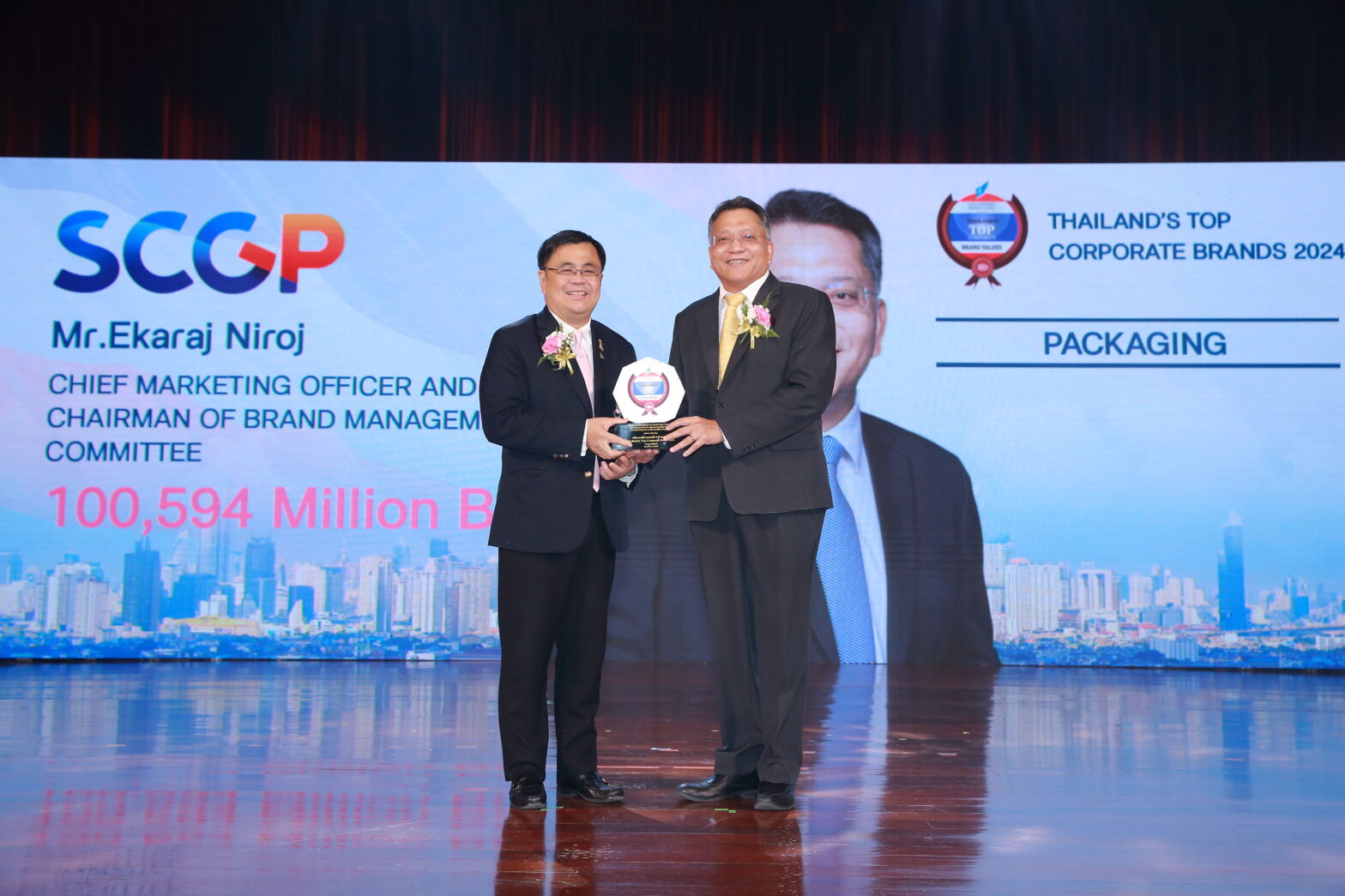
SCGP received the Business Partner Award 2024, earning both the Silver Award and the Sustainability Award from Thai Beverage Public Company Limited.
These accolades highlight SCGP’s outstanding performance and dedication to sustainability for 2023-2024. Mr. Ekaraj Niroj, Chief Marketing Officer – SCGP, as a representative, accepted the awards at the SX Partnerships for the Goals: TSCN Business Partner Conference 2024 on October 4, 2024, at the Queen Sirikit National Convention Center. This recognition confirms the strong business partnership between SCGP and Thai Beverage in collaboration to bring values to customers and raise the industry standards for sustainability.

Related Contents

Loading Data...

Healthcare Supplies team at Thailand Lab 2024 showcasing expertise and innovation in medical equipment

News

Healthcare Supplies team at Thailand Lab 2024 showcasing expertise and innovation in medical equipment

Previous slide
Next slide
Loading Data...
The Healthcare Supplies Business team is proud to showcase products and solutions at Thailand Lab 2024, held at BITEC Bangna.
They presented their expertise in medical testing equipment distributed by Deltalab S.L., a member of SCGP, to address the needs of customers. Highlighted products included Deltaklean—a swab set designed for microbiological detection, a test kit for microbial contamination on smooth surfaces, RT-PCR test kits, and various laboratory equipment (Labware). In addition, the service solutions from Research Laboratory Services (RLS) and D.O.M (Direct Odor Monitoring), an innovative solution for odor analysis and monitoring, were also presented in the event. Thailand Lab 2024 brought together leading enterprises from around the world, featuring over 300 companies and more than 500 brands. The event showcased cutting-edge technologies, research breakthroughs, and innovations that cater to the evolving needs of industry professionals. These advancements align with current healthcare trends that consumers are increasingly prioritizing.

Related Contents

Loading Data...

SCGP awarded a plaque of honor for ‘Leading Organization in Greenhouse Gas Management – Excellent Level’

News

SCGP awarded a plaque of honor for ‘Leading Organization in Greenhouse Gas Management – Excellent Level’

Loading Data...
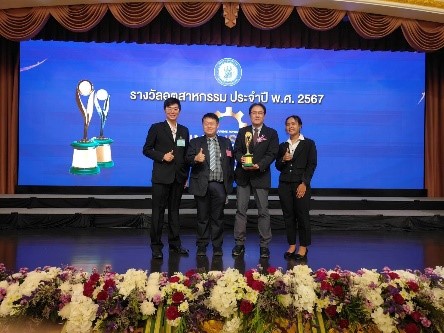
SCG Packaging Public Company Limited (SCGP), represented by Chanathip Kupradit, ESG Integration Manager (left side), received a prestigious plaque of honor for being a ‘Leading Organization in Greenhouse Gas Management – Excellent Level, Industrial Products Category 2024’
also known as Climate Action Leading Organization (CALO) – Excellence Level, for the second consecutive year from the Thailand Carbon Neutral Network (TCNN). The award was presented by Jatuporn Buruspat, Permanent Secretary of the Ministry of Natural Resources and Environment, in recognition of SCGP’s leadership in greenhouse gas management and its contribution to Thailand’s transition toward a low-carbon economy and the achievement of Sustainable Development Goals (SDGs). SCGP conducts its business with a strong focus on mitigating climate change impacts and reducing greenhouse gas emissions. Its sustainability initiatives encompass key sectors such as pulp, printing & writing paper, packaging paper, paper packaging, foodservice packaging, and plastic packaging, all of which are certified under the Carbon Footprint of Product Certification, ensuring environmentally responsible production processes.

Related Contents

Loading Data...

SCGP Signs MOU with Once Medical to Strengthen Medical supplies and labware Solutions in Thailand

News

SCGP Signs MOU with Once Medical to Strengthen Medical supplies and labware Solutions in Thailand

Previous slide
Next slide
Loading Data...
SCG Packaging Public Company Limited (SCGP), represented by Mr. Danaidej Ketsuwan, Chief Financial Officer (CFO) and Mr. Karan Tejasen, Chief Operating Officer – Healthcare Supplies Business, signed a Memorandum of Understanding (MOU) with Once Medical Company Limited
represented by Dr. Puttisak Sattayaprasert, M.D., Chief Executive Officer (CEO), to collaborate on developing syringe and other medical supplies and labware. This partnership aims to enhance SCGP’s packaging solutions, medical supplies and labware businesses, while also robustly and comprehensively broaden customer network.

Related Contents

Loading Data...

Prepack receives Silver Award at A-PLAS 2024 for Innovative and Eco-Friendly Packaging Development

News

Prepack receives Silver Award at A-PLAS 2024 for Innovative and Eco-Friendly Packaging Development

Previous slide
Next slide
Loading Data...
Prepack Thailand Co., Ltd. was honored with the Silver Award at The 5th Thailand Plastics Awards 2024, held during A-PLAS 2024. The recognition was awarded for the company’s development of the ANTI MOS packaging, specifically designed for disposable diapers.

This innovative packaging effectively prevents product odor from escaping while being fully recyclable. Mr. Virat Wongvarodom, Managing Director – Prepack, accepted the award on behalf of the company on September 19 at the Bangkok International Trade and Exhibition Centre (BITEC), Bangna.

The ANTI MOS packaging is produced from PE-EVOH film through a co-extrusion blown film process, and fully recyclable, receiving recognition from leading recycling organizations, including CEFLEX. Designed to work with existing machinery, the packaging reduces environmental impact without compromising durability, cleanliness, or safety. This achievement demonstrates Prepack’s commitment to delivering high-quality, sustainable packaging solutions that meet both consumer needs and environmental goals. The award further reflects Prepack’s leadership in responsible packaging on an international level.

Related Contents

Loading Data...

VEXCEL in SCGP received international certification from the Association of Plastic Recyclers (APR), guaranteeing that its recyclable plastic packaging meets global green standards.

News

VEXCEL in SCGP received international certification from the Association of Plastic Recyclers (APR), guaranteeing that its recyclable plastic packaging meets global green standards.

Loading Data...
Vexcel Pack Company Limited in SCGP focuses on developing products for a sustainable world. Recently, the company has received the international certification from the Association of Plastic Recyclers (APR)

for its innovative Barrier PP multi-layer polypropylene packaging, which prevents oxygen permeation. This packaging not only extends the shelf life of ready-to-eat foods but is also recyclable into polypropylene plastic. The product aligns with environmental trends by increasing the use of recycled plastics and reducing the use of new plastics.

The Association of Plastic Recyclers (APR) is the only international non-profit organization in North America that focuses specifically on improving the plastic recycling process. It aims to drive market demand for recycled plastics (PCR), encourage manufacturers to incorporate recycled materials into their products, and promote efficient plastic use in line with circular economy principles. The APR certification will boost confidence among Vexcel’s strategic customer in the United States regarding environmental sustainability. Beyond affirming the quality of products and services, the certification highlights SCGP’s commitment to thoughtful design. Vexcel collaborates with customers to develop packaging that not only meets functional needs but is also recyclable. This achievement is another significant step in our commitment to developing environmentally sustainable products in accordance with ESG principles and global standards.

Related Contents

Loading Data...

SCGP Unveils Secrets to Packaging Design: “Building Brands to Thrive with Standout Packaging”

News

SCGP Unveils Secrets to Packaging Design: “Building Brands to Thrive with Standout Packaging”

Previous slide
Next slide
Loading Data...

The seminar titled “Building Brands to Thrive with Standout Packaging,” organized by SCG Packaging Public Company Limited, or SCGP, in collaboration with the Thailand Management Association (TMA), the Marketing Department of the Faculty of Commerce and Accountancy, Chulalongkorn University, and the Yuthasar Foundation, highlighted the significance of creative ideas in packaging design as a driving force behind successful brand building.

The seminar’s speakers shared insights into current trends and offered tips for brand building through design, emphasizing that packaging must serve as a brand representative to establish strong recognition among consumers. Achieving this requires a deep understanding of customer insights, while the packaging must be commercially viable. A leading trend in packaging design today is sustainable packaging, which focuses on environmental friendliness. Packaging must be “Love at First Sight” and “Unforgettable” Piyanut Panpiemras, Co-Founder & Head of Strategies at Head100 Co., Ltd., and Subcommittee Member for Marketing Management at the Thailand Management Association (TMA), said that a brand is represented by every touchpoint that consumers encounter, forming a puzzle that creates the overall brand image. Among these, “packaging” is a crucial touchpoint. Well-designed packaging can reduce brand-building costs and advertising expenses. As a key to building a brand that stands out, packaging must be “love at first sight,” creating a positive experience for customers. This includes ease of use, material efficiency, and incorporating features such as a barcode on the packaging to tell the brand’s story. “It is like meeting someone for the first time. The first things we notice are their clothes, face, and hair. We must be impressed by the outside before getting to know the person within. Packaging serves this same role.” Another key tip is being “unforgettable.” Packaging should not only be aesthetically pleasing but it must also tell a story that resonates with customers. This can be achieved by creating a distinctive identity and unique selling points, providing benefits, and addressing customer pain points. Ultimately, the packaging should generate revenue for the brand. “For some brands, you do not even need to see the logo. Just by looking at the packaging, you immediately recognize the brand due to its unique shape and standout color scheme. Packaging serves as a theater—a platform for brand storytelling—to complete the marketing process.” Good Packaging: Appealing to Customers and Aligned with Megatrends Wanna Swuddigul, CEO of SilverActif Co., Ltd. and Subcommittee Member of MMG-TMA, shared a compelling view on global trends that are poised to impact the business landscape. In today’s fast-evolving business world, consumer demands are becoming increasingly diverse and complex, driven by factors such as the rapid advancement of technology, growing awareness of sustainability, and an aging society. These are all “megatrends” that marketers and business leaders must closely watch. “The importance of adapting and offering products that not only meet consumer needs but also align with major global trends is paramount, especially when creating personalized experiences for consumers through distinctive and unique packaging design.” In the present day, packaging is not just a wrapper for products, but a tool that can build strong relationships with consumers. Designing packaging with attention to detail and effectively telling the brand’s story is a key factor in enabling businesses to thrive in today’s highly competitive market. Sustainable Packaging: A Strong Trend Responding to Global Needs Sumeth Boonyathanapan, Manager of Inspired Studio and Packaging Solutions at SCGP, discussed four major trends in packaging production: 1. Sustainable packaging, 2. Tailored design to build brand identity, 3. Material and packaging innovation, and 4. Smart packaging. “The trend of sustainable packaging has been talked about for a long time, but what has changed is the intensity. Sustainability now means reducing resource usage, minimizing material consumption, and increasing the proportion of recycled materials. Due to the growing pressure from environmental issues, countries are becoming more aware and have introduced laws and regulations governing both the production and sale of products to minimize environmental impact. This includes the packaging used for goods, compelling brands to quickly adapt to evolving trade rules.” Sumeth also addressed the challenges of designing sustainable packaging, saying that sustainable packaging must not only be practical and aesthetically pleasing but also economically viable. Production and marketing must meet the needs of both brand owners and consumers. Packaging: A Sustainable Asset for Brands Krittavit Laohadtanaphorn, Executive Director of M. Water Co., Ltd., the producer of Sprinkle drinking water, shared that effective packaging design must convey the story and identity of the brand to connect with consumers. Packaging is an asset that contributes to the brand’s long-term sustainability. One key aspect to focus on is that “it must be truly practical,” meaning that Sprinkle bottles must genuinely reduce waste and be 100% recyclable. This approach is not merely for marketing or public relations purposes. Additionally, there should be “no compromise with limitations,” meaning efforts must be made to overcome obstacles during packaging development to achieve the set goals. “In the case of Sprinkle, we wanted to design a labelless water bottle to reduce plastic waste and ensure it is 100% recyclable. However, the real challenge was not about creating an aesthetically pleasing design, but about displaying the required information on the packaging in compliance with the regulations of the Food and Drug Administration (FDA). We developed a technique to use inkjet printing directly on the bottle’s surface, ensuring that the information is clearly legible. The inkjet ink we use can be easily washed off during the recycling process and is environmentally safe, reflecting our commitment to not compromise with limitations as a manufacturer while contributing to reducing environmental impact,” Krittavit explained. All of this underscores the importance of packaging design, a driving force behind brand success. It is both a science and an art, where brand owners aim to use packaging to communicate emotions that resonate with customers, while also ensuring feasibility in production, logistics, and marketing.

Related Contents

Loading Data...

SCGP Presents “Consumer and Performance Packaging” Production Base, Showcasing Production Advancements and Sustainable Packaging

News

SCGP Presents “Consumer and Performance Packaging” Production Base, Showcasing Production Advancements and Sustainable Packaging

Previous slide
Next slide
Loading Data...

SCGP led the media on a visit to “consumer and performance packaging” production base, showcasing advancements in production with world-class technology

to enhance efficiency, variety of packaging, and supply continuity, as well as managing the plant under ISCC PLUS standards, focusing on carbon management and sustainable development throughout the supply chain. SCGP also unveiled sustainable packaging solutions and consumer and performance packaging certified CFP (Carbon Footprint of Products). The advantages of production bases are proximity to customers, which enhances opportunities and competitiveness.

Related Contents

Loading Data...

Deltalab partners with SCGJWD for the “Free Zone Warehouse Service Contract 2024 – 2025”, becoming the ASIA HUB from Spain to Asia Pacific

News

Deltalab partners with SCGJWD for the “Free Zone Warehouse Service Contract 2024 – 2025”, becoming the ASIA HUB from Spain to Asia Pacific

Previous slide
Next slide
Loading Data...
Deltalab, S.L. (Deltalab) signed a contract with SCGJWD for the “Free Zone Warehouse Service Contract 2024 – 2025,” marking a significant step towards becoming the ASIA HUB for distributing Deltalab’s products from Spain to other countries in the Asia Pacific region. It is considered an end-to-end service logistics solution with a new business model.

Mr. Karan Tejasen, Chief Operating Officer of Healthcare Supplies Business; Dr. Pongsuda Pongtanya, Managing Director of Deltalab, S.L., Spain; and the SCGP team, along with the executives from SCGJWD, including Mr. Bunn Kasemsap, Co-CEO; Mr. Charintorn Noparat, SVP of Freight Business; Mr. Prakit Worawattananon, SVP of Business Integration Management; and Mr. Bordin Tanthaphaiboon, SVP of Transport and Warehouse Operations, all attended the contract signing ceremony. The service contract is for one year (2024-2025).

This is the next step of the collaboration to connect and develop expertise, strengthen the growth of the Healthcare Supplies business with quality.

Related Contents

Loading Data...