
Loading Data...
53
SCGP Holds FUTURE UNLOCKED 2027 Seminar to Provide Customers Develop Purpose-Driven Packaging and Drive Sustainable Growth
Loading Data...
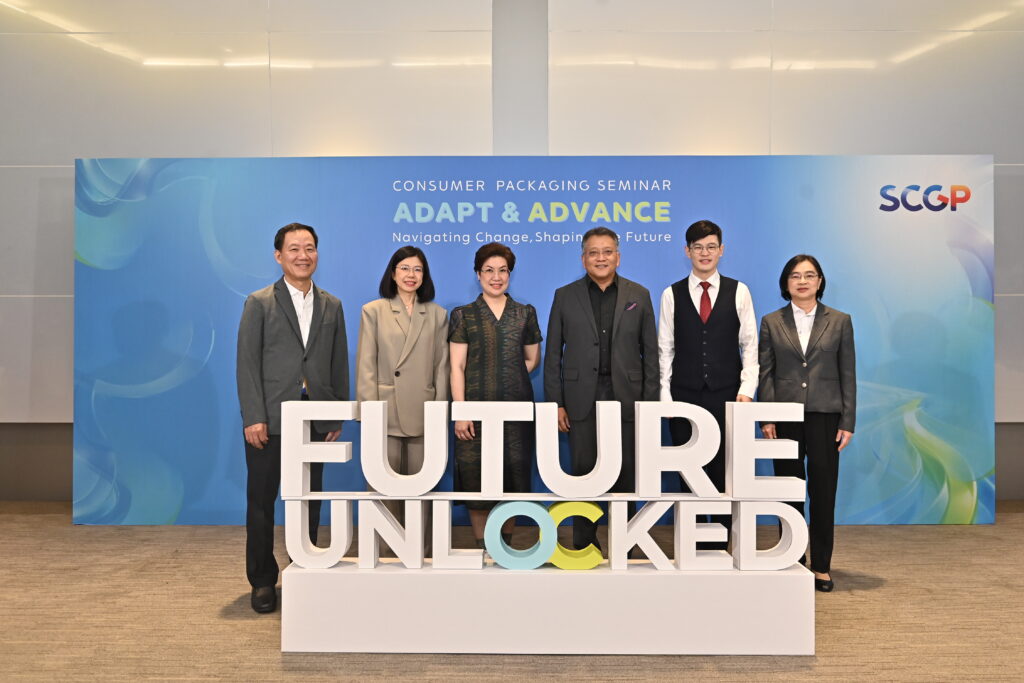
SCGP holds the seminar “FUTURE UNLOCKED 2027: ADAPT & ADVANCE – Navigating Change, Shaping the Future,” inviting customers to prepare for and plan their businesses in 2027 amid changing consumer behavior in the AI era and increasingly stringent global packaging regulations. The seminar presented insights and practical approaches that customers can apply, from designing packaging that meets consumer needs and improving operational efficiency and cost management to preparing for regulatory requirements in end markets.

Mr. Ekaraj Niroj, Chief Marketing and Customer Officer, SCG Packaging Public Company Limited, or SCGP, said that amid global economic uncertainty, changing consumer behavior in the AI era, and increasingly stringent global packaging regulations, SCGP organized the “FUTURE UNLOCKED 2027: ADAPT & ADVANCE – Navigating Change, Shaping the Future” seminar as part of its commitment to supporting customers in preparing for change. The event provided a platform to exchange consumer insights and industry trends, enabling customers to apply these insights to business planning and packaging development that better meets consumer needs and end-market requirements. Alongside organizing the seminar, SCGP continues to advance its packaging business and expand production capacity across the region to support customer demand, while exploring new businesses to address increasingly diverse needs. These efforts reinforce SCGP’s role as a packaging solutions partner, supporting customers from planning through business execution.
Research Reveals How AI Is Changing Consumer Purchasing Decisions
Asst. Prof. Ake Pattaratanakun, Ph.D. (Cantab), President of Thailand’s Marketing Association and Advisor to the SCGP Brand Working Committee, said that artificial intelligence (AI) and the behaviors of younger generations are key developments that businesses need to monitor. AI is playing an increasingly important role throughout the consumer journey, from information searches to purchasing decisions. Meanwhile, Generation Alpha consumers also demonstrate different behaviors from Generation Z. Businesses therefore need to understand how each consumer group uses technology and what factors influence their purchasing decisions.
A survey of 24,000 Thai consumers nationwide conducted by the Department of Marketing, Chulalongkorn Business School, Chulalongkorn University, found that quality and sustainability remain important purchasing factors both before and after the emergence of AI. Before AI became more influential, price and popularity were among the leading factors in purchasing decisions. In the AI era, however, consumers place greater importance on convenience and brand familiarity. Businesses should therefore make it easier for consumers to search for information, select products, and recognize brands, while maintaining product quality and communicating their sustainability commitments clearly.

Businesses Urged to Prepare for New Regulations
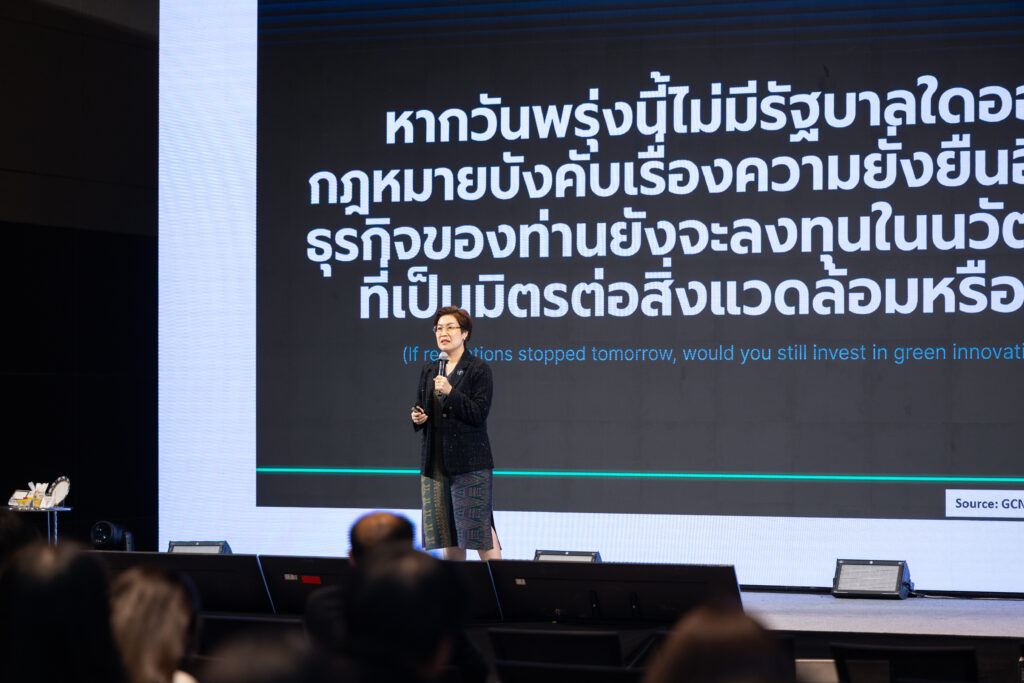
Dr. Thanyaporn Krichtitayawuth, Executive Director at Global Compact Network Thailand (GCNT), said that businesses should closely monitor packaging regulations in their end markets. The European Union has introduced the Packaging and Packaging Waste Regulation (EU PPWR) to promote a circular economy throughout the packaging lifecycle, while certain U.S. states have adopted Extended Producer Responsibility (EPR) principles, requiring businesses to share responsibility for the costs and management of packaging after use.
Regarding packaging fees, European countries have adopted three main approaches. Spain, Portugal, and France adjust fees based on the environmental impact of packaging. Poland and Italy have restructured their fee systems, with Italy taking post-consumer packaging management costs into account. Meanwhile, the Netherlands and Belgium offer fee reductions as incentives for using recycled materials. These approaches make packaging design increasingly important to business competitiveness, particularly in reducing material use, extending product shelf life, and designing packaging that is easier to sort and recycle.
Preparing for EU PPWR requires both adaptability and business resilience, as the regulation will be implemented progressively. Its requirements range from restricting substances of concern and introducing labeling requirements to reducing empty space in packaging, increasing the recycled content of plastic packaging, and promoting reuse in certain business sectors. Businesses should therefore begin planning early, from material selection and packaging design to maintaining traceable data, to ensure readiness for the requirements of each market.
SCGP Delivers Value Beyond Packaging
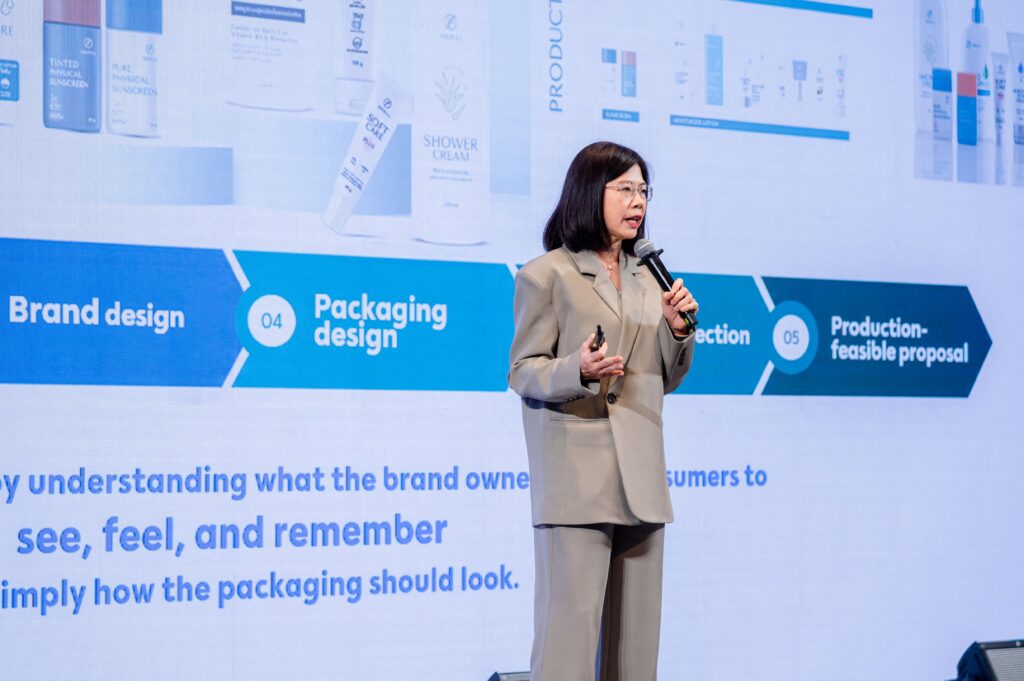
Ms. Atittaya Chumpa, Director – Marketing, Branding and Sustainability, SCGP, said that packaging accompanies consumers throughout different moments of their daily lives, from selecting products and carrying them home to storing, reusing, or sharing photos of them. According to the GlobalData 2026 Q3 Consumer Survey, which covers consumers worldwide, consumers value packaging that is visually appealing, convenient to use, and reflective of their personal identity. They are also interested in special-edition products created through brand collaborations or produced in limited quantities. At the same time, packaging design must consider sales channels and usage requirements. For example, takeaway food packaging should be easy to carry and maintain food quality during transportation.
SCGP translates these expectations into design briefs developed in collaboration with customers, creating packaging that integrates three dimensions of experience:
• Product Experience: Designing packaging that is comfortable to hold, easy to open and close, and helps maintain food freshness.
• Brand Experience: Using shapes, colors, and materials that communicate brand identity, including special-edition packaging that consumers want to share or collect.
• Living Experience: Creating packaging that is convenient to carry, neatly fits in refrigerators, and blends naturally into dining environments.
Designing with all three dimensions of experience in mind helps add value to customers’ products through both the convenience consumers can experience firsthand and distinctive features that make brands more memorable. At the same time, SCGP considers operational efficiency and cost management by making effective use of materials, designing packaging that is easier to sort and recycle, and taking end-market requirements into account.
The seminar provided customers with an opportunity to gain insights and perspectives from all three speakers, which they can apply to their individual business challenges. These include adapting to the growing role of AI in purchasing decisions, preparing for evolving environmental regulations, and leveraging consumer insights to strengthen brands and develop marketing strategies. SCGP stands ready to support customers in applying these approaches through collaborative packaging solutions that create product differentiation, strengthen competitiveness, and drive sustainable growth together.